K-Ride Saves Rs 169 Crore With Benniganahalli Double-Decker Rail Corridor
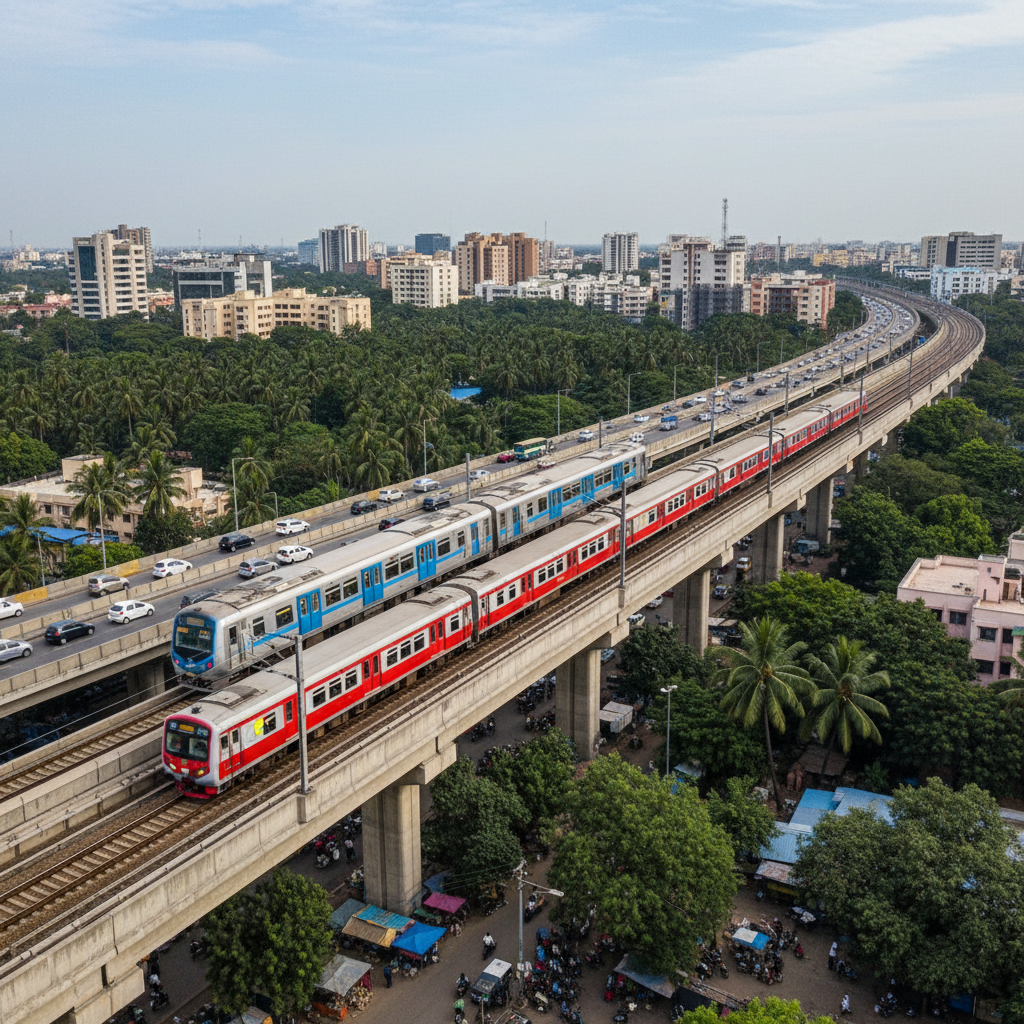
The Rail Infrastructure Development Company (Karnataka) Limited (K-Ride) has saved between Rs 150 crore and Rs 169 crore in project costs by implementing a joint double-decker rail corridor in Benniganahalli, Bengaluru. The innovative engineering solution integrates the Bengaluru Suburban Transport Project (BSTP) and Namma Metro within a single shared alignment.
According to an official report published by K-Ride, the shared alignment also prevented the acquisition of nearly 1.6 acres of premium land in the area. By avoiding this land acquisition near the Benniganahalli flyover, the implementing agencies successfully prevented the displacement of approximately 600 local residents who would have otherwise been impacted by the construction.
The joint infrastructure initiative is the result of an agreement signed in 2021 between K-Ride, which is the implementing agency of the Bengaluru Suburban Transport Project, and the Bangalore Metro Rail Corporation Ltd (BMRCL) to coordinate their respective transit networks.
The plan integrates the suburban rail’s Corridor 4, also known as the Kanaka Line, with Namma Metro’s Blue Line (Phase 2A). Specifically, the suburban rail viaduct—which runs along the Kanaka Line between Heelalige and Rajanakunte—is positioned directly underneath the elevated Metro viaduct. This design creates a unique multi-level transport corridor that accommodates two distinct mass rapid transit systems within a common right of way.
Under the current design, the suburban trains and Metro trains will run parallel to each other for a distance of approximately half a kilometre.
Because the two transit systems use different power sources, the corridor requires the integration of two distinct electrical traction systems: alternating current (AC) and direct current (DC). This complex engineering integration was reviewed and vetted by experts at the Indian Institute of Science (IISc) to ensure safety and operational compatibility.