GBA Considers Precast Technique to Build Jalahalli Underpass in Under 50 Days
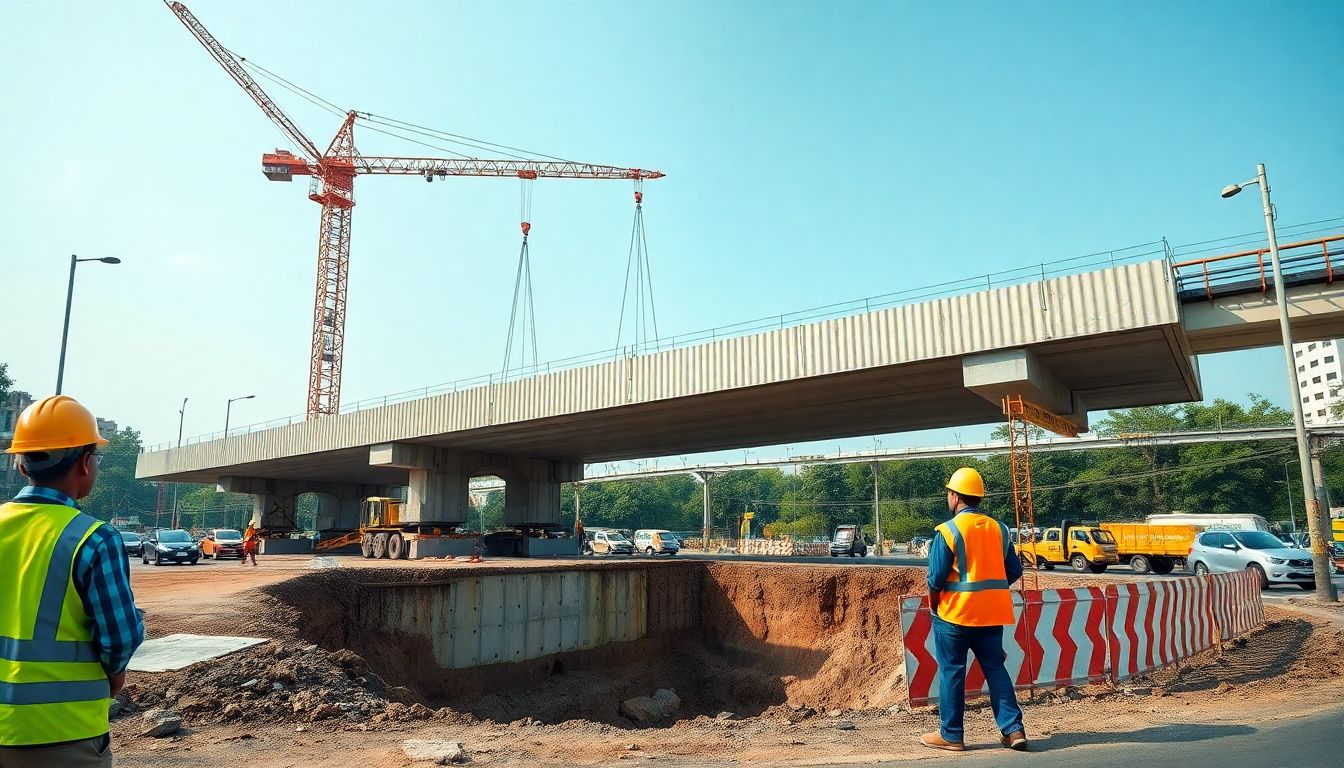
The Greater Bengaluru Authority is planning to adopt a rapid construction technique to build the long-delayed Jalahalli underpass in north Bengaluru, aiming to complete the work in less than 50 days. The civic authority is evaluating the installation of precast corrugated structures at the junction to significantly shorten project duration and reduce traffic disruption.
M. Maheshwar Rao, Chief Commissioner of the GBA, said the method was proposed by a private group and appeared both feasible and time-effective. He stated that the authority is seriously considering the technique, with an improvised design tailored to local conditions if required. According to Mr. Rao, precasting and preliminary preparations would take about one month, while on-ground installation would require less than 20 days. The technique has previously been used for a railway underpass project in another state.
If implemented, this will mark the second time the city's civic administration has attempted to construct an underpass using an accelerated precast method. In 2007, the erstwhile Bruhat Bengaluru Mahanagara Palike attempted to build the Cauvery Junction underpass within 72 hours using precast segmental boxes. That project was eventually completed in nine days after workers encountered an unexpected leak in a water supply line, with traffic opening on the 11th day.
K.S. Krishnareddy, who served as Chief Engineer of Major Roads at the BBMP during the 2007 project, noted that the Cauvery Junction structure was intended as a quick fix to last five to eight years but has survived far longer. He noted that Bengaluru was the first in the country to implement precast segmental boxes for an underpass.
The Jalahalli underpass project was originally conceived in 2019 but was stalled for over half a decade because of land acquisition hurdles. While planning has now gained momentum, 26 properties are still left to be acquired.
The Jalahalli junction serves as a vital corridor for interstate and inter-district buses, making traffic management during construction a major concern. Civic permissions have historically been held up due to congestion risks, similar to the Wind Tunnel Junction underpass, which saw delays exceeding five years over traffic concerns.