BWSSB Fines 44 Bengaluru Violators Rs 2.2 Lakh For Wasting Drinking Water
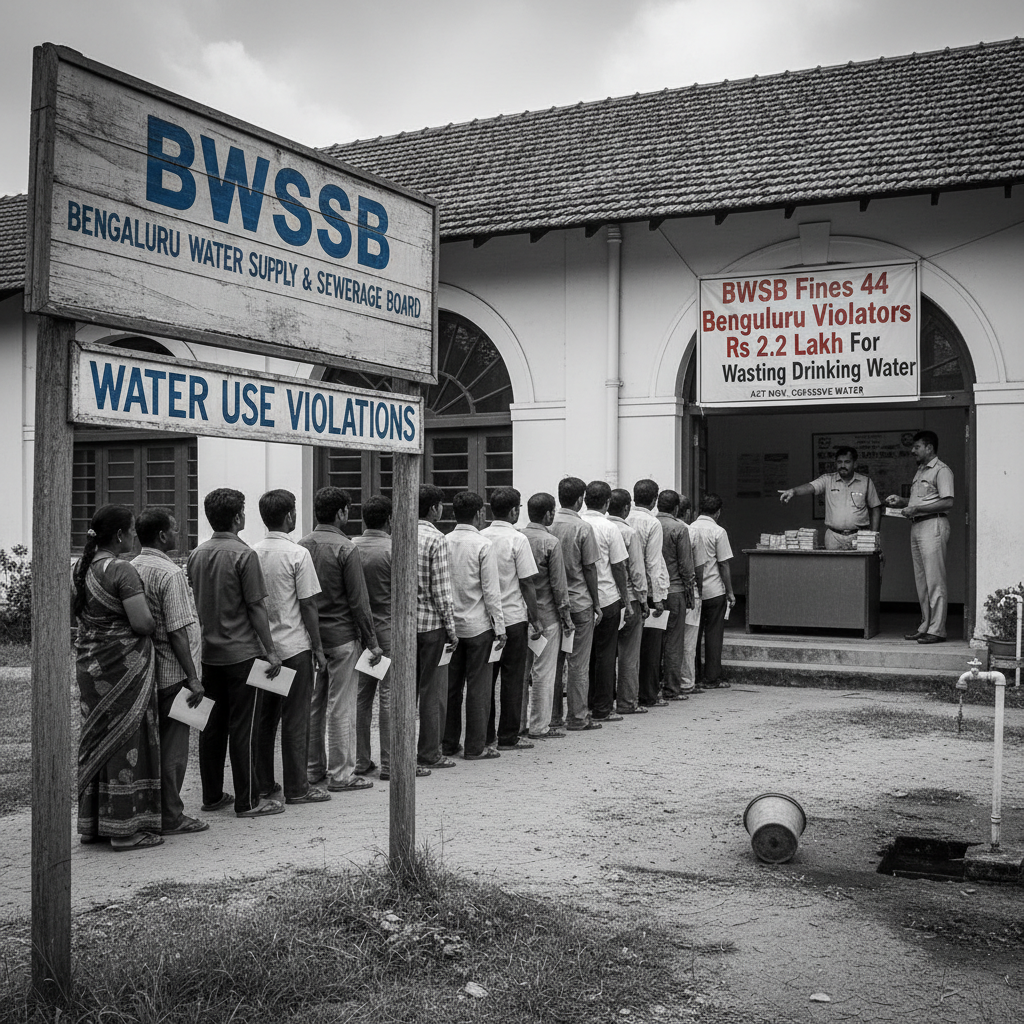
The Bangalore Water Supply and Sewerage Board (BWSSB) collected Rs 2.2 lakh in spot fines from 44 violators in Bengaluru between March 1 and May 8. The enforcement drive was part of an ongoing crackdown to prevent the misuse of potable drinking water during the high-demand dry season.
Under the water conservation regulations of the BWSSB, officials imposed a penalty of Rs 5,000 per violation. The regulations strictly prohibit residents from using treated drinking water for non-essential activities. These restricted activities include washing vehicles, gardening, construction work, road cleaning, and operating decorative fountains.
The water board originally intensified the enforcement of these conservation rules during the 2024 water crisis. At that time, depleting groundwater levels and low reservoir storage prompted the authority to implement stricter monitoring and penalties across the city.
According to data released by the BWSSB, the East zone of Bengaluru recorded the highest number of infractions. The zone accounted for 17 of the 44 total cases, resulting in Rs 85,000 in collected fines. Within this zone, the EE(E)-2 division reported 11 violations.
The West and South zones each recorded 12 violations, with each zone contributing Rs 60,000 in fines. In the West zone, the EE(W)-3 division emerged as a major hotspot for water wastage, accounting for 10 of the zone's cases during the review period.
The North zone recorded three violations, leading to Rs 15,000 in fines. Meanwhile, the Central zone achieved full compliance, recording zero violations between March 1 and May 8.
With summer demand placing pressure on water resources, the BWSSB has continued its inspections across Bengaluru and maintained the spot fines of Rs 5,000 per violation to deter wastage.
BWSSB Chairman Ram Prasath Manohar V noted that public awareness regarding water conservation has increased significantly. He stated that more people are voluntarily complying and are conscious about avoiding wastage, which may have contributed to fewer reported violations.