Varthur STP tragedy police collect DNA samples and add manual scavenging charges
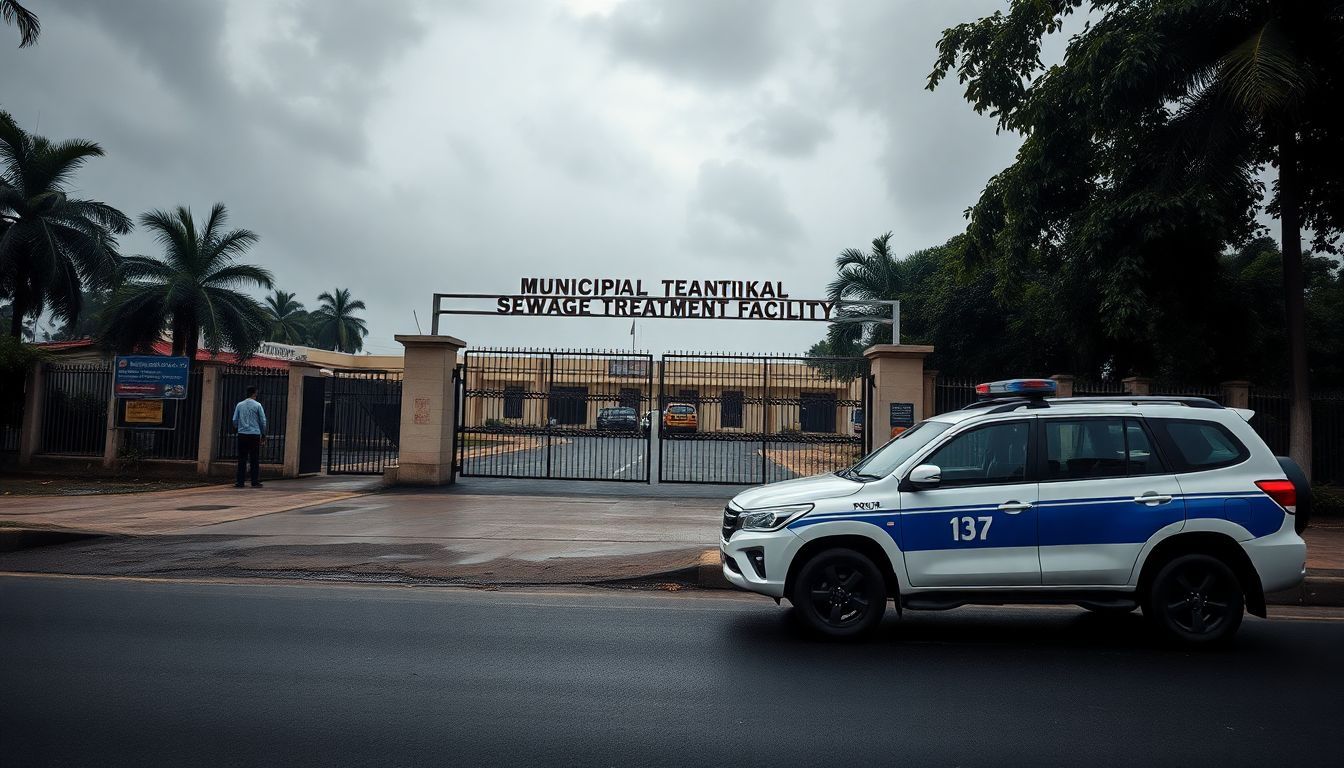
Medical staff at Bowring and Lady Curzon Hospital in Bengaluru collected blood samples on Tuesday from the siblings of a victim of the June 18 sewage treatment plant (STP) tragedy in Varthur. The DNA profiling aims to formally identify the deceased, while a local court has permitted the addition of manual scavenging prohibition charges to the ongoing police investigation.
The blood samples were collected from Sikandar Raja Vamshi and Akhilesh Raja Vamshi, the brothers of one of the deceased victims, following a directive from the II Additional Chief Judicial Magistrate. In an order dated June 25, the Magistrate instructed the Station House Officer of the Varthur Police Station to ensure the brothers were produced for the procedure on June 30, with medical equipment arranged by the hospital.
The victims, identified in reports as Brijesh, Akhilesh, and Agilan, tragically lost their lives during the June 18 mishap. They were reportedly directed by an accused company and contractor to work beneath a wet well coarse screen gate, where they fell into a manhole while attempting to clean it.
The DNA test was welcomed by social activist T Narasimha Murthy, who noted that the mortal remains of the victim were found in pieces. He stated that the test would help confirm the biological link between the victim and his brothers. Activists also met with Bangalore Water Supply and Sewerage Board (BWSSB) Chairman Manjula N to demand stringent action against those responsible.
Alongside the identification process, the court permitted the addition of Sections 7, 8, and 9 of the Prohibition of Employment as Manual Scavengers and their Rehabilitation Act 2013 to the case. The investigation was initially registered under Sections 106 and 125 of the Bharatiya Nyaya Sanhita (BNS) for rash and negligent acts.
Section 7 of the manual scavenging act prohibits employing anyone to clean sewers or septic tanks without protective gear. Section 8 prescribes up to one year of imprisonment and a Rs 50,000 fine for a first offence, while Section 9 addresses hazardous cleaning without safety protocols.