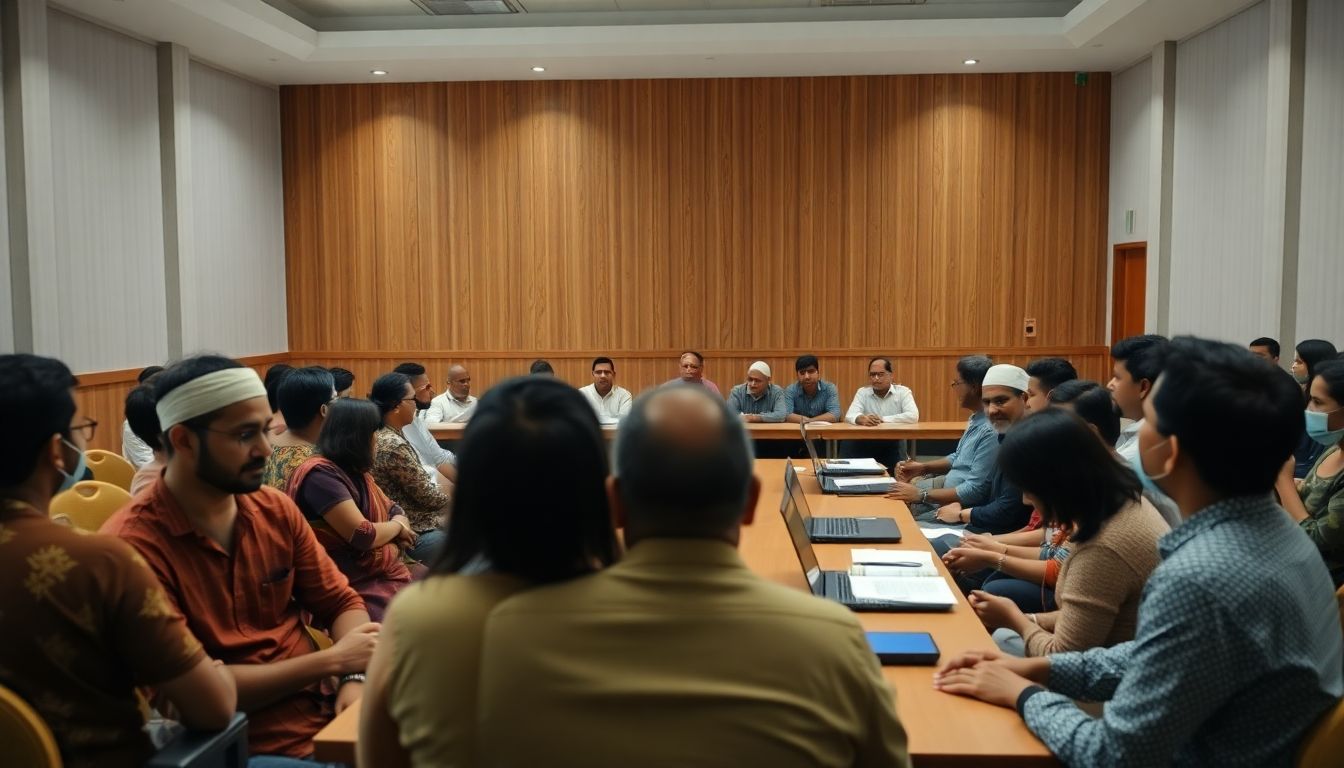
State government faces backlash over overlapping Bengaluru master plans

The Karnataka state government's push to draft multiple overlapping urban and economic master plans for the Bengaluru Metropolitan Region has sparked intense criticism and legal challenges from civic groups and urban planners. The initiatives, split between the Greater Bengaluru Authority (GBA) and the Bengaluru Development Authority (BDA), aim to address decades of unregulated growth but have been accused of bypassing legally mandated planning bodies.
Under the current framework, the GBA is tasked with preparing a fresh GIS-based Master Plan with a 2047 vision for the 686.82-square-kilometer core city area. Meanwhile, the BDA is drafting its own master plan for the 540.66-square-kilometer outer peripheral area, with a vision limited to 2041. Adding to the complexity, Karnataka Chief Minister D. K. Shivakumar has indicated that the GBA's boundaries could expand in the future, potentially intruding into the BDA's jurisdiction.
These separate plans will be superimposed by an Economic Master Plan covering an expansive 8,000 square kilometers across Bengaluru Urban, Rural, and Ramanagara districts. The state government has signed a Statement of Intent with the ISEG Foundation to draft this economic plan, which targets doubling Bengaluru's economy by 2032 and outlines growth priorities up to 2037.
However, urban experts warn that dividing the planning of a single functional city among multiple agencies creates severe coordination issues. Jaya Dhindaw, Executive Director of the Sustainable Cities Programme at WRI India, noted that when separate consultants prepare plans for different parts of the same city, the integrated vision is often lost. She argued that a single agency should ideally lead the master plan preparation.
The planning process has also run into legal hurdles. The Citizens Action Forum (CAF) has filed cases in the High Court of Karnataka, arguing that the planning authority rightfully belongs to the Metropolitan Planning Committee (MPC) under the 74th Amendment.
Urbanist Ashwin Mahesh described the government's efforts as "legally flawed" because they bypass the MPC. Mahesh also challenged the technical capacity of the BDA, stating that its planning roles are filled by individuals unrecognized in the professional planning world. He warned that because the current process does not follow the law, it remains highly vulnerable to citizen lawsuits, which have stalled the city's planning efforts for years.