Soumya Swaminathan Addresses IISc Bengaluru Graduates at Virtual Convocation
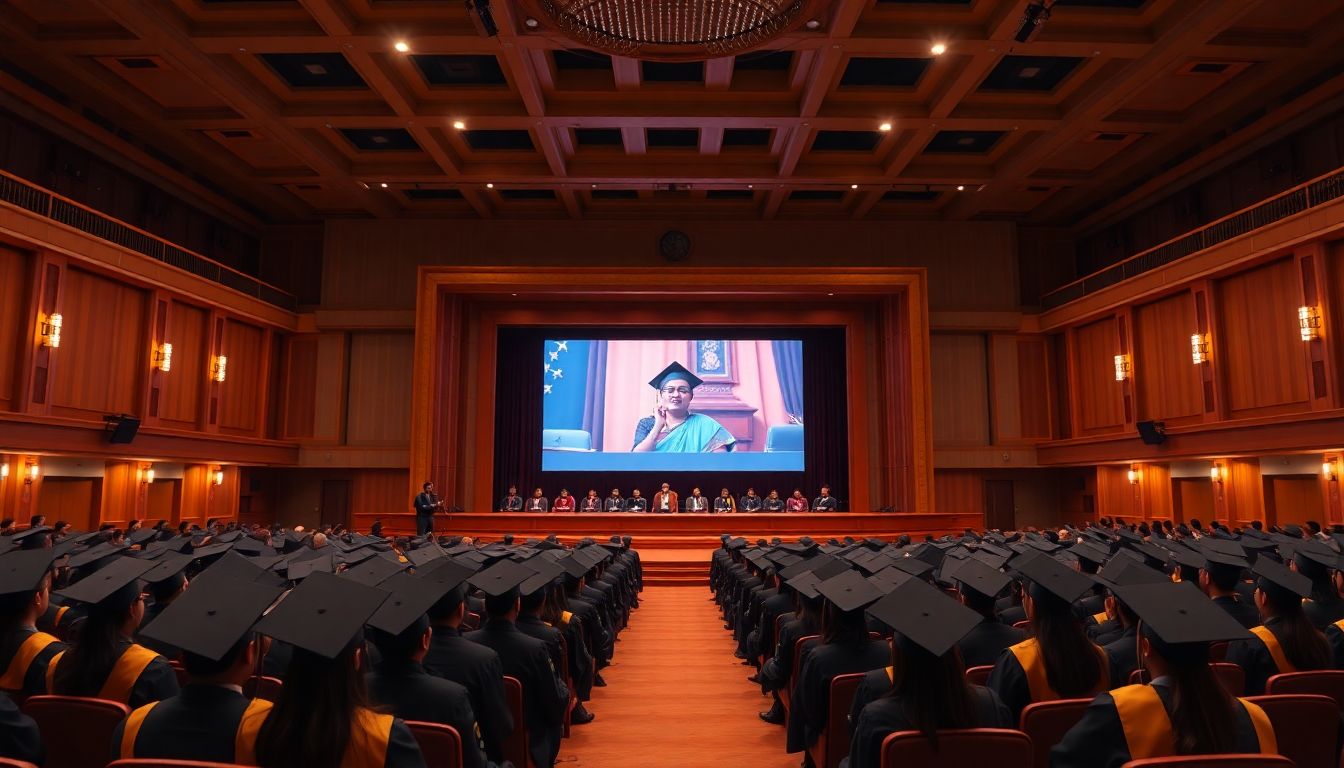
On Friday, July 10, 2026, Dr. Soumya Swaminathan, Chairperson of the M.S. Swaminathan Research Foundation, delivered a virtual convocation address to graduating students at the Indian Institute of Science (IISc) in Bengaluru. During her speech, she emphasized that scientific discoveries must reach society with integrity, transparency, and compassion, urging future scientists to work across traditional disciplines to improve the lives of vulnerable communities.
Dr. Swaminathan highlighted that today's scientific breakthroughs increasingly emerge from collaboration rather than a single researcher working alone in a laboratory. She noted that the most important discoveries of the future will come from the intersection of different fields, explaining that a climate scientist needs an economist, an engineer needs a biologist, a physician needs a data scientist, and an ecologist needs Artificial Intelligence.
According to Dr. Swaminathan, scientific excellence alone is not enough for India. She stated that science must become increasingly relevant to real-world challenges, such as cleaner air, children's nutrition, sustainable agriculture, resilient cities, affordable healthcare, biodiversity conservation, and equitable growth.
She remarked that the true measure of scientific success resides not only in academic journals, but where lives actually change. She noted that seeing scientific work improve the lives, livelihoods, and well-being of vulnerable communities brings a great deal of satisfaction.
She also cautioned the graduating students about the ethical implications of emerging technologies as they become more powerful. She specifically raised concerns about Artificial Intelligence regarding fairness, exclusion, privacy, and accountability. Additionally, she pointed out that genomics experiments, particularly those used to tweak the human genome or create pathogens with different properties, can do immense good but can also be used for ethically questionable purposes.
During the graduation ceremony, a total of 1,452 PhD and Master's students, along with 118 undergraduate students, received their degrees. Academic excellence medals were also conferred upon 82 students.