NHAI Contests Bulk Waste Generator Tag Over Garbage on Ghat Highways
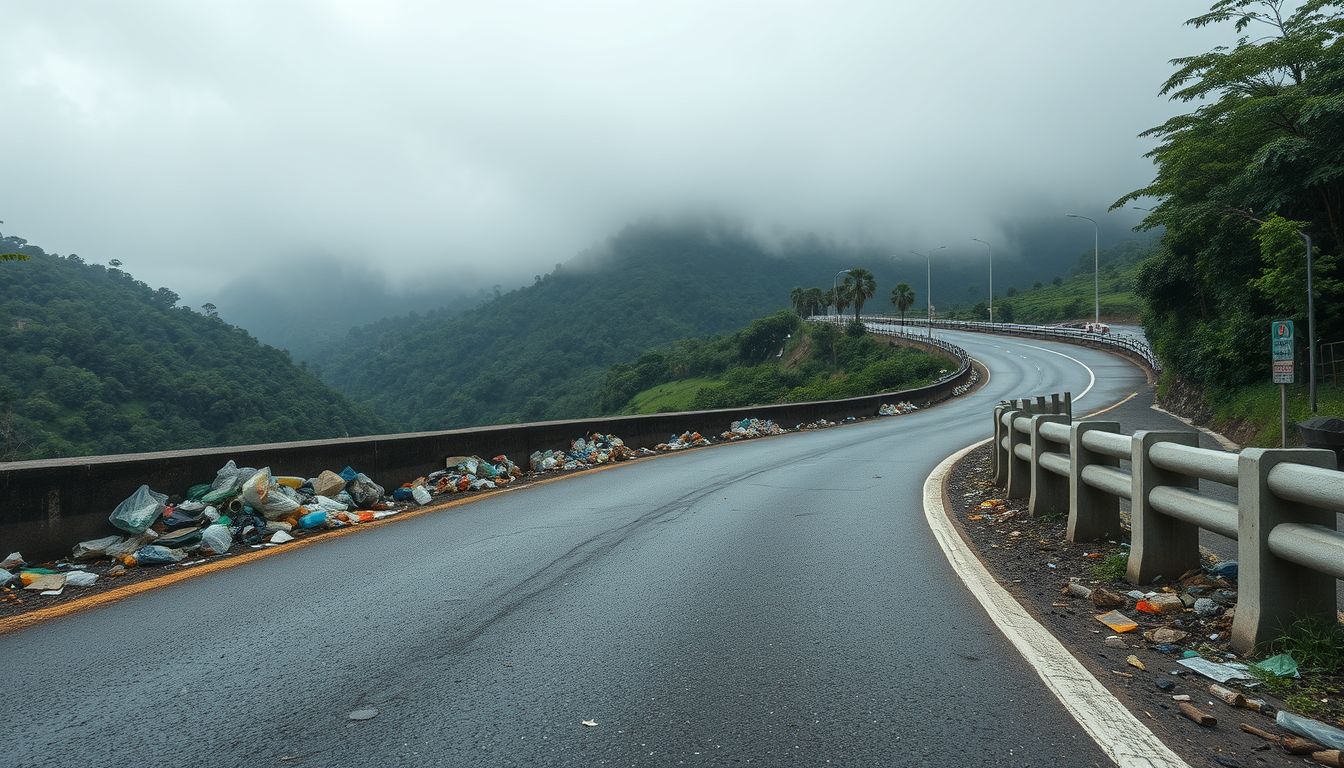
Highway authorities have resisted being labeled as waste generators, placing the responsibility for roadside trash on municipalities as garbage continues to accumulate along roads passing through eco-sensitive zones in Karnataka.
Waste discarded along key ghat routes, including Shiradi Ghat (NH 75) and Charmadi Ghat (NH 73), has raised environmental concerns. The garbage often washes into streams and rivers, entering reserved forests and wildlife protected areas before reaching the sea. A similar accumulation of garbage has been noted along Bisle Ghat near Kukke Subrahmanya.
Benedict Fernandes of the National Environment Care Federation approached the National Green Tribunal to hold the National Highways Authority of India (NHAI) accountable for waste along the NH 66 coastal highway, which connects Panvel in Maharashtra to Kanyakumari in Tamil Nadu. Fernandes argued that road authorities act as custodians of the land and must be classified as bulk waste generators to enforce accountability and penal provisions.
Documents show that NHAI has formally disputed the bulk waste generator tag. The authority maintained that the waste generator status applies strictly to entities that produce waste through occupancy, use, or operational activities. It stated that roadside litter is discarded by commuters and local residents and cannot be attributed to the authority.
Confusion over jurisdictional boundaries among the Public Works Department, the NHAI, and the Ministry of Road Transport and Highways has hindered enforcement against polluters, while local civic bodies struggle to manage waste within municipal limits. Harish N, a resident of Sakleshpur, highlighted that trash dumped at Kempuhole in Shiradi Ghat flows into the Netravati river, contaminating core forest areas.
NHAI sources stated that concessionaires have been directed to conduct regular cleaning operations and clear vulnerable dumping spots immediately whenever alerts are received.