Karnataka Power Demand Falls to 290 MU as Monsoon Brings Relief to Thermal Plants
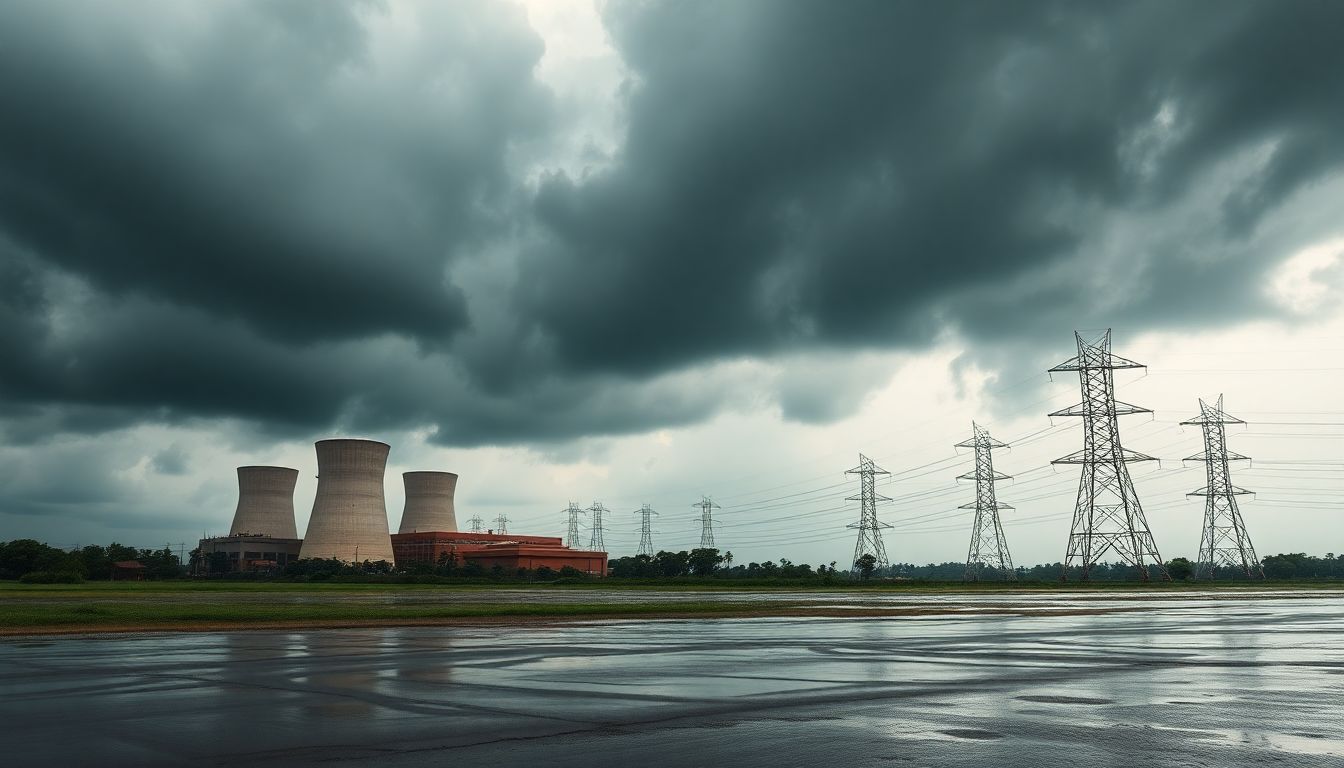
Widespread rainfall across Karnataka has led to a sharp drop in electricity demand, bringing relief to the state's major thermal power stations that operated under heavy pressure throughout the peak summer months.
Karnataka's daily electricity demand, which stood at around 356.539 million units (MU) in April, has fallen to 290.14 MU as monsoon activity strengthened across the state. With demand easing, several units at the state's three key thermal power stations—BTPS, RTPS, and YTPS—are now being kept offline or run at reduced capacities.
Between April and August 24, the three thermal stations generated a combined 11,194.672 MU of electricity, up from 9,638.36 MU during the same period last year. BTPS led production with 4,360.828 MU, while RTPS generated 3,679.493 MU and YTPS contributed 3,154.349 MU.
Combined monthly generation peaked in April at 2,701.972 MU and steadily declined to 2,478.412 MU in May, 2,258.220 MU in June, 2,242.052 MU in July, and 1,559.505 MU up to August 24.
RTPS operates seven 210 MW units and one 250 MW unit with a total installed capacity of 1,720 MW. BTPS has two 500 MW units and one 700 MW unit totalling 1,700 MW, while YTPS has two units of 800 MW each.
Officials noted that early monsoon deficits had initially raised concerns about drought conditions and higher power requirements. However, consistent rainfall in the Malnad region and other parts of Karnataka has increased inflows into major reservoirs, including the Tungabhadra reservoir. The higher water levels are expected to boost hydropower generation and further lessen reliance on thermal plants.
Officials also highlighted operational challenges during prolonged rains, noting that wet coal can complicate handling and feeding at thermal stations. While thermal generation may decline further if heavy rainfall continues, plants will maintain generation as a precautionary measure to address any sudden surges in demand.