Karnataka Moves Supreme Court Against High Court Order Allowing Bike Taxis
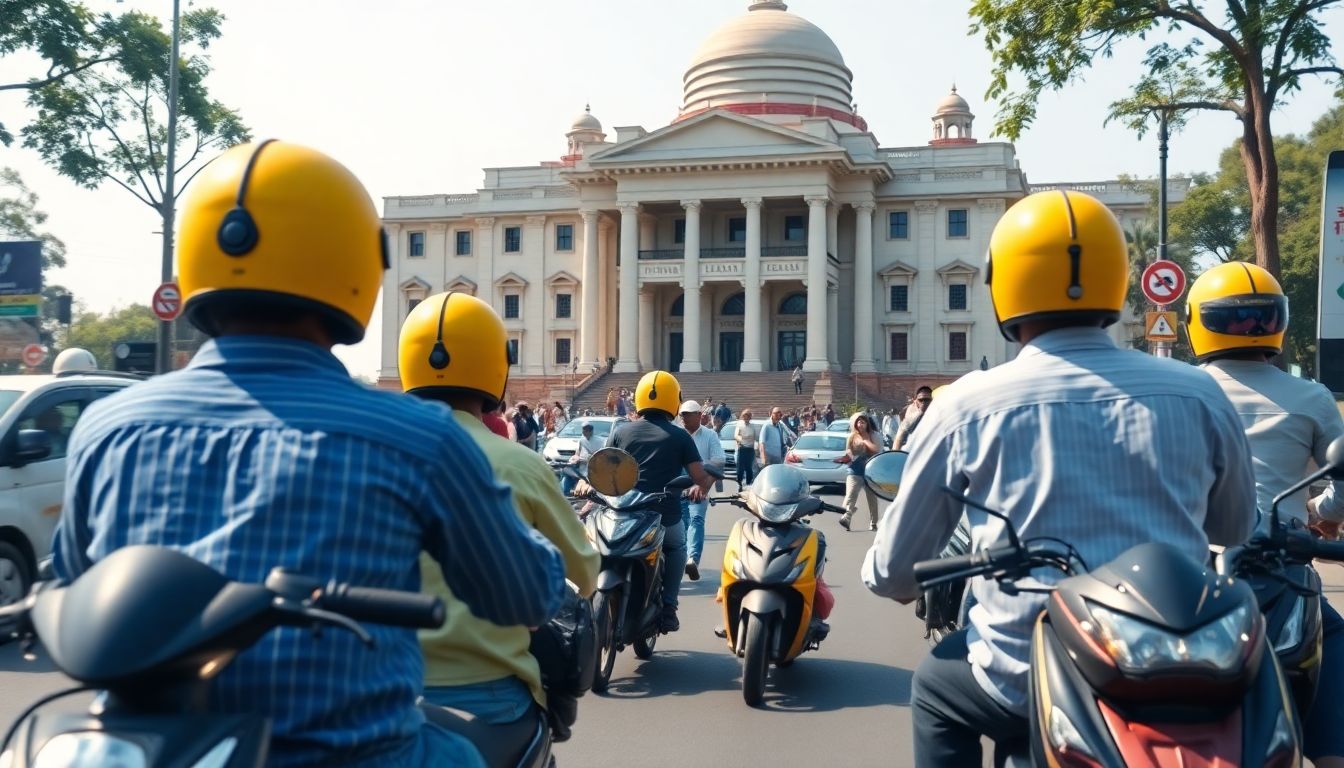
The Karnataka government has filed a special leave petition in the Supreme Court challenging a Karnataka High Court ruling that allowed the registration and operation of motorcycle bike taxis across the state, including in Bengaluru. The High Court Division Bench had, in a January 23 judgment, effectively lifted a previous ban by directing transport authorities to consider applications for registering motorcycles as transport vehicles and issuing permits for bike taxi operations.
The Supreme Court could consider the state's challenge on August 11, though the Karnataka government has circulated a request seeking an adjournment. In its petition, the state argued that two-wheelers lack essential passenger safety features present in auto-rickshaws and cabs, raising serious concerns regarding accident vulnerability, insurance coverage during fatalities, road congestion, and women's security.
The state contended before the top court that the High Court erred by converting transport authorities' discretionary power to grant contract-carriage permits under the Motor Vehicles Act, 1988, into a mandatory obligation. According to the government, motorcycles are designed primarily for personal transportation and cannot automatically be treated as commercial passenger vehicles without a comprehensive regulatory framework covering safety and operational standards.
Karnataka also pointed out that its Karnataka On-Demand Transportation Technology Aggregator Rules, 2016, were framed specifically for four-wheeled motor cabs and did not contemplate motorcycles. Furthermore, the state cited a March 18, 2026, response by the Union Ministry of Road Transport and Highways in the Rajya Sabha, which stated that "bike taxi" is not defined under the Motor Vehicles Act or its associated rules.
The legal dispute originated after a single judge directed bike taxi services to halt operations until the state framed a policy permitting them. Ride-hailing aggregators, including Ola, Uber, and Rapido, alongside motorcycle owners and the Bike Taxi Welfare Association, subsequently challenged that order. The Division Bench later ruled in January that operating taxis is a legitimate business under Article 19(1)(g) of the Constitution and held that an unwritten prohibition could not stand without a specific law or notification.
Addressing concerns about rider livelihoods, Karnataka argued that restricting bike taxis is not a blanket ban on earning income through motorcycles. The state noted that riders can continue operating in delivery and logistics roles through platforms such as Swiggy, Zomato, Amazon, and Flipkart, backed by protective measures under the Karnataka Platform-Based Gig Workers (Social Security and Welfare) Act, 2025.