Karnataka Diverts Nearly 140 Hectares of Forest Land for 145 Projects in 2025-26
Karnataka diverted nearly 140 hectares of forest land for 145 non-forestry projects between April 2025 and March 2026, according to official data, intensifying concerns over shrinking wildlife habitats and escalating human-wildlife conflict across the state.
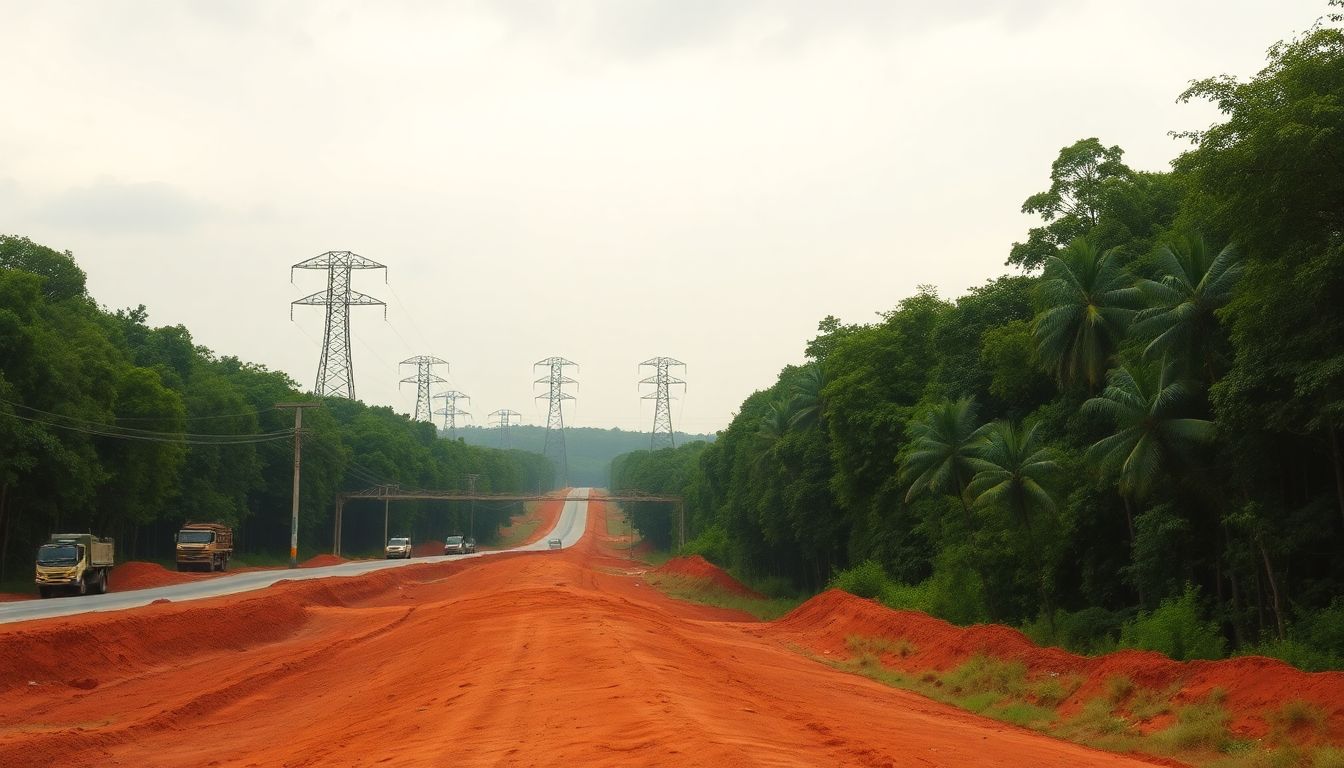
The cleared projects include the laying of transmission lines and the construction of roads. Among the major clearances, 56.7 hectares were diverted specifically for the upgradation of a national highway and the construction of an approach road leading to a stone quarry area.
With these latest clearances, the cumulative forest area diverted for non-forestry purposes in Karnataka has reached 32,879.35 hectares across more than 1,000 projects.
The ongoing diversion of green cover comes despite Karnataka falling short of national environmental benchmarks. The National Forest Policy recommends that at least 33% of a state's total geographical area should remain under forest cover to maintain ecological stability. Currently, Karnataka has 21.21% of its total area under forest cover, accounting for 40,678.23 square kilometres out of its total geographical area of 191,791 square kilometres. While 28.92 square kilometres of forest area was added between April 2025 and March 2026, conservationists warn that linear infrastructure projects continue to threaten ecological security.
Under the Van (Sanrakshan Evam Samvardhan) Adhiniyam, 1980—formerly known as the Forest (Conservation) Act, 1980—proposals to divert forest land are submitted by user agencies, including central and state departments, institutions, companies, and private individuals. These proposals are scrutinised by field units of the Karnataka Forest Department before being forwarded by the state government to the Union Ministry of Environment, Forest and Climate Change for final approval under Section 2 of the Act.
Wildlife conservationists have strongly opposed ongoing diversions, pointing out the risk to basic ecological resources and slope stability.
"We have a small fraction of protected forests, which is vital for various ecosystem services, including water security. The existing forest areas should remain inviolate," said wildlife conservationist Akhilesh Chipli. "We are facing a climate emergency and need to increase our forest cover. Our priorities should be clean air and water, and we will not achieve them through such projects."
Joseph Hoover, former member of the State Board of Wildlife and founder of United, raised concerns over the expansion of road networks through sensitive zones, stating that road projects contribute to land instability, landslides, and increased conflict between wildlife and local farming communities.