Jawaharlal Nehru Planetarium Marks National Space Day With Student Events
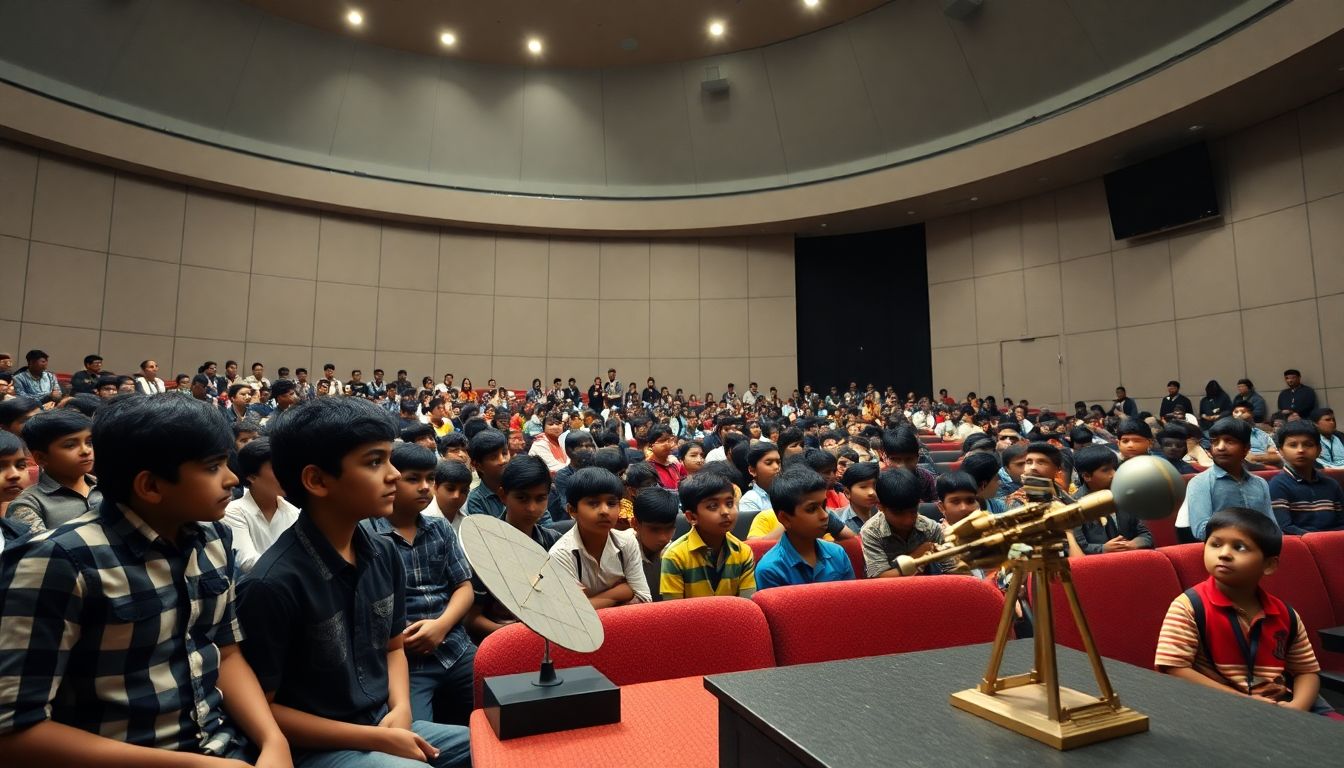
The Jawaharlal Nehru Planetarium in Bengaluru organised a celebratory event on Sunday to mark National Space Day, drawing around 300 students from schools across the city as well as regions such as Mandya and Mysuru.
Speaking at the event, Indian Institute of Astrophysics director Prof. Annapurni Subramaniam addressed students on the decade-long journey of the Indian Space Research Organisation's AstroSat mission. She highlighted AstroSat as the country's first dedicated astronomy mission designed to study celestial sources across X-ray, optical, and ultraviolet spectral bands simultaneously.
Prof. Subramaniam detailed the indigenous technologies developed for the mission, noting that the Ultra-Violet Imaging Telescope was conceived at the Indian Institute of Astrophysics and subsequently provided to ISRO. The telescope has remained operational and instrumental to the mission since 2015.
Jawaharlal Nehru Planetarium director Dr BR Guruprasad spoke about India's space aspirations from the inception of its space programme in 1963, placing special emphasis on the Chandrayaan programme. He noted that Chandrayaan-1 conclusively detected water on the Moon, while the Chandrayaan-2 orbiter continues to orbit the Moon and transmit high-resolution images of the lunar surface despite the mission's landing setback.
Dr Guruprasad urged students to draw inspiration from the nation's achievements in space exploration and highlighted the Union government's roadmap to land Indian astronauts on the Moon by 2040.
Alongside the talks, the planetarium hosted interactive sessions, including a quiz competition for high school students and a space vehicle model-making workshop for students in standards VII to X.