India Post Releases Special Postmark Honoring Kodigehalli Inscription Stone
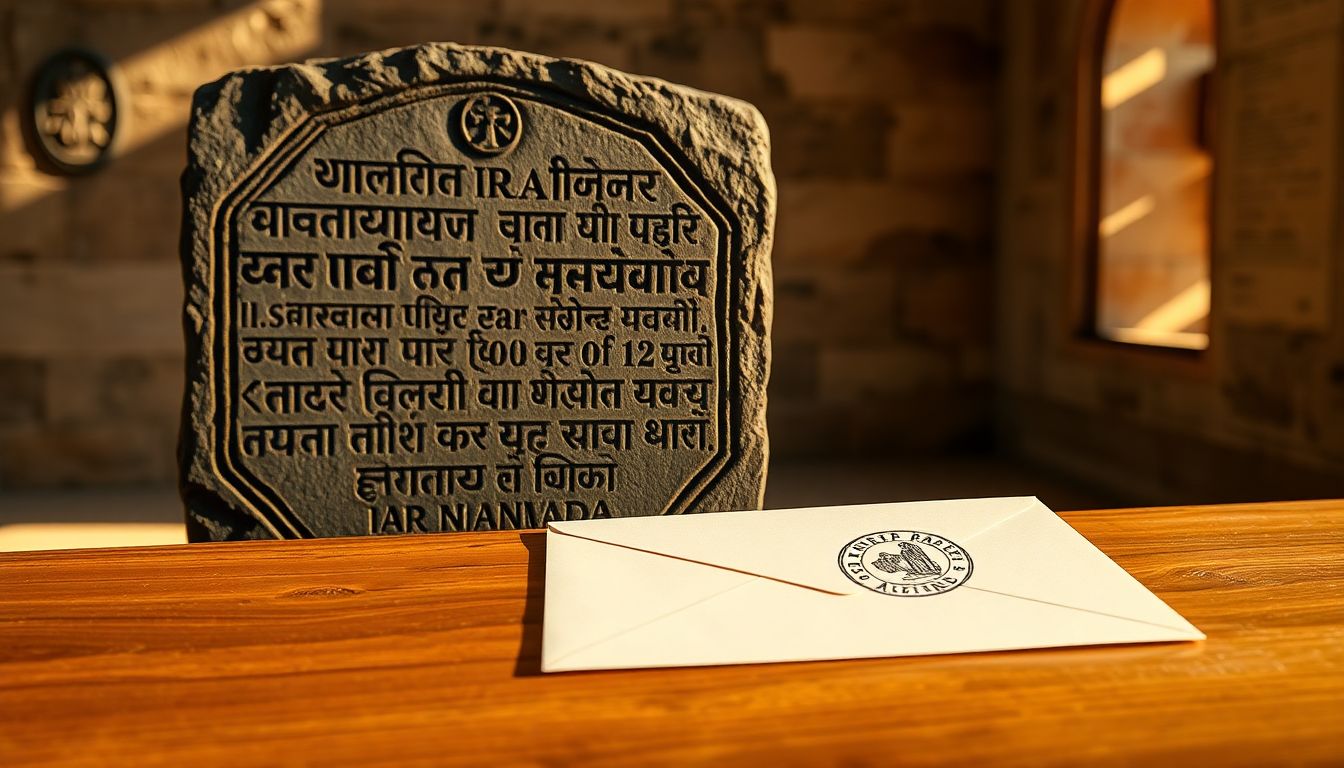
India Post recently released a Permanent Pictorial Cancellation, a special postmark, in Virupakshapura, a hamlet now part of present-day Kodigehalli in Bengaluru. The postmark honors the historical 15th-century Kodigehalli inscription stone, linking the modern locality's identity to its historical roots.
The weathered granite slab, which was discovered in Kodigehalli, features an inscription dated August 8, 1431 CE. The text records a land grant made during the reign of the Vijayanagara emperor Devaraya II. In the grant, Prataparaya, the son of general Mangappa Dandanayaka, gifted the village of Virupakshapura to Lord Somadeva of Sakanasamudra, known today as Hesaraghatta. Over the centuries, these 'kodige' (land grant) lands around the village grew into and lent their name to the modern locality of Kodigehalli.
The 1431 inscription is highly detailed, outlining exactly how the income from the land was to be spent. It allocated 20 gold gadyanas (coins) to fund the daily rituals of adornment and entertainment for the deity. This income supported a seven-member dance-drama troupe, which included two actors, a dancer, a maddale drummer, a sitar player, an upanga player, and a kamsale performer.
The inscription is also notable for its accounting and astronomical records. The scribe used 15th-century Kannada accounting notation, writing halves as '||', where two vertical strokes denoted a half. Furthermore, it records a solar eclipse on August 8, 1431, making it the earliest known inscription in the Bengaluru region to document an astronomical event.
In addition to the historical text, the newly released postmark features a small illustration of a viragal, or herostone, found in the same village. The herostone depicts an unnamed 15th- or 16th-century warrior who fell in battle.
The release of the pictorial cancellation aims to preserve and share the rich history of the locality, which also references a vanished landscape, including a tank called Devasamudra Hiriyakere that is now buried beneath RMV 2nd Stage.