IISc Study Finds Hebbal Tunnel Costs Six Times More Per Passenger Than Metro
The proposed short road tunnel beneath Hebbal could cost nearly six times more for every passenger carried than an underground metro alternative, according to a technical assessment conducted by researchers at the Indian Institute of Science (IISc).
Prepared by Prof Ashish Verma and researchers from the Sustainable Transportation Lab at IISc, the traffic-impact study calculated the capital cost spread across passenger trips over the operating life of the project. The assessment estimated the tunnel's cost at Rs 5.23 per passenger, compared with Rs 0.86 for an underground metro. When evaluated by peak-hour passenger capacity, the tunnel would require Rs 13.74 lakh per passenger per hour per direction, compared to Rs 2.26 lakh for the metro, indicating that the road project demands 6.12 times more public money to deliver comparable passenger benefits.
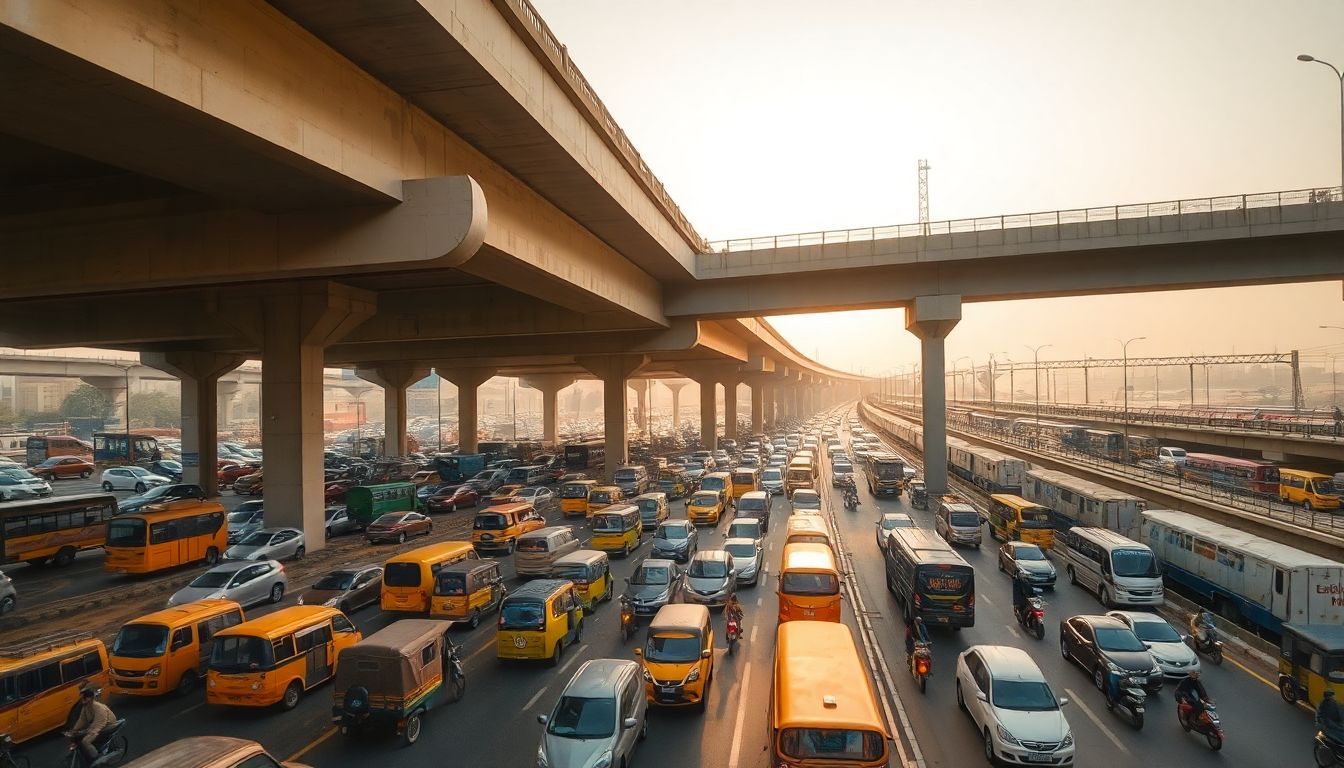
The proposed six-lane tunnel is planned to run 2.228 km between Esteem Mall and Veterinary College beneath Hebbal to provide a faster connection between Bengaluru and Kempegowda International Airport. However, the study warned that the tunnel would ease traffic only along its short stretch and merely displace bottlenecks.
Researchers evaluated Bengaluru's traffic conditions for 2027, 2031, and 2041 across three scenarios: the existing road network, the network with the tunnel, and the network with an underground metro. Using the volume-to-capacity (V/C) ratio, where a figure above 1 signifies demand exceeding road capacity, the study found that without intervention, the ratio at Hebbal Junction for airport-bound traffic could reach 2.42 by 2041, while Bengaluru-bound traffic at the tunnel entry could hit 3.31.
While the tunnel would lower the Hebbal Junction ratio to 1.21 towards the airport and 0.86 towards Bengaluru by 2041, congestion would shift to entry and exit points near Veterinary Hospital and Esteem Mall. Spillovers could reach Mehkri Circle and back up inside the tunnel.
In contrast, an underground metro would reduce the junction's V/C ratio to between 0.03 and 0.06 by shifting commuters to public transit. The report also flagged a sharp 60-metre-radius curve near the Esteem Mall exit that could force speeds down from 60 kmph to 40 kmph, flooding risks near the Hebbal Lake catchment, and the need for geotechnical assessments near existing flyover piers.