Four Aerators Installed at Ulsoor Lake as Part of Rs 9.6 Crore Rejuvenation Plan
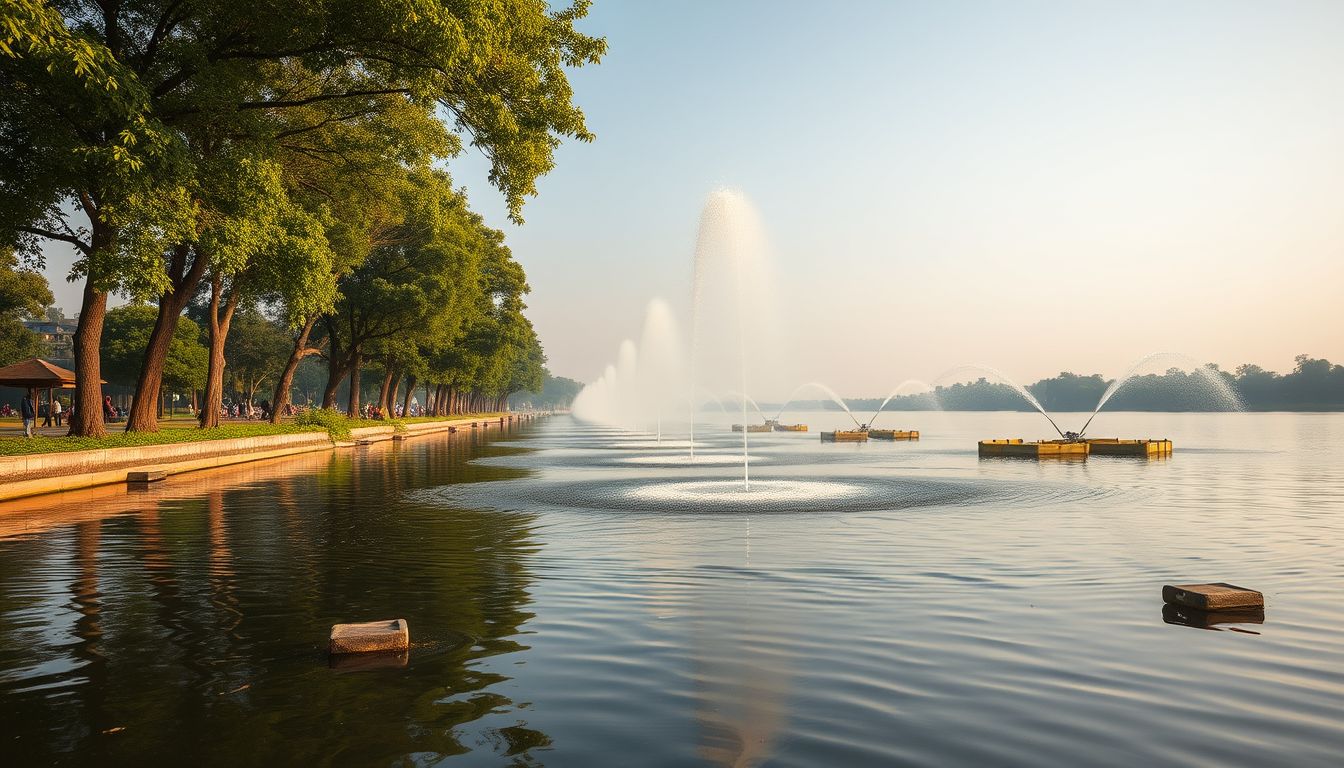
Four submersible aerators have been installed at Ulsoor Lake in Bengaluru as part of a series of civic measures aimed at boosting oxygen levels and upgrading the water quality from Class D to Class C. The project details were outlined in a report submitted by the Karnataka state government to the National Green Tribunal (NGT).
According to the affidavit, the local administration must continuously operate the existing floating aerators and install 10 additional aerators across various points of the lake. To support groundwater recharge and boost storage capacity, the Minor Irrigation Department has allocated Rs 9.60 crore for groundwater improvement measures. Under this funding, desilting work is being undertaken across approximately 65 acres of the lake's water-spread area to remove accumulated silt and sludge.
To address pollution caused during festival activities, authorities are constructing a reinforced cement concrete immersion pond to replace the deteriorating stone masonry Kalyani. The civic authorities have also introduced floating gardens, planted vegetation, and set up a real-time water quality monitoring system to track pollution levels.
Further recommendations submitted by the Karnataka State Pollution Control Board aim to eventually turn the lake into a drinking water source following conventional treatment and disinfection. The board recommended installing additional trash barriers, desilting the water body, and conducting regular maintenance of stormwater drains to stop silt from entering. It also advised increasing the number of wetlands around the lake to absorb excess nutrients and instructed the Bengaluru Water Supply and Sewerage Board to increase chlorination at its 2 MLD sewage treatment plant to control faecal coliform levels.
Despite the ongoing efforts, city-based lake experts have raised concerns regarding the project's design. V Ramprasad, founder of Friends of Lakes, stated that the planned desilting depth of just 0.6 metres is inadequate to facilitate groundwater recharge or handle flood mitigation during heavy rainfall. Experts recommended that officials consult the Military Engineer Group to understand the historical design and original functionality of the lake bed and its sluice gates.