CAG Audit Flags Rs 6,603 Crore Land Cost Hike, Low Revenue in Bengaluru Metro
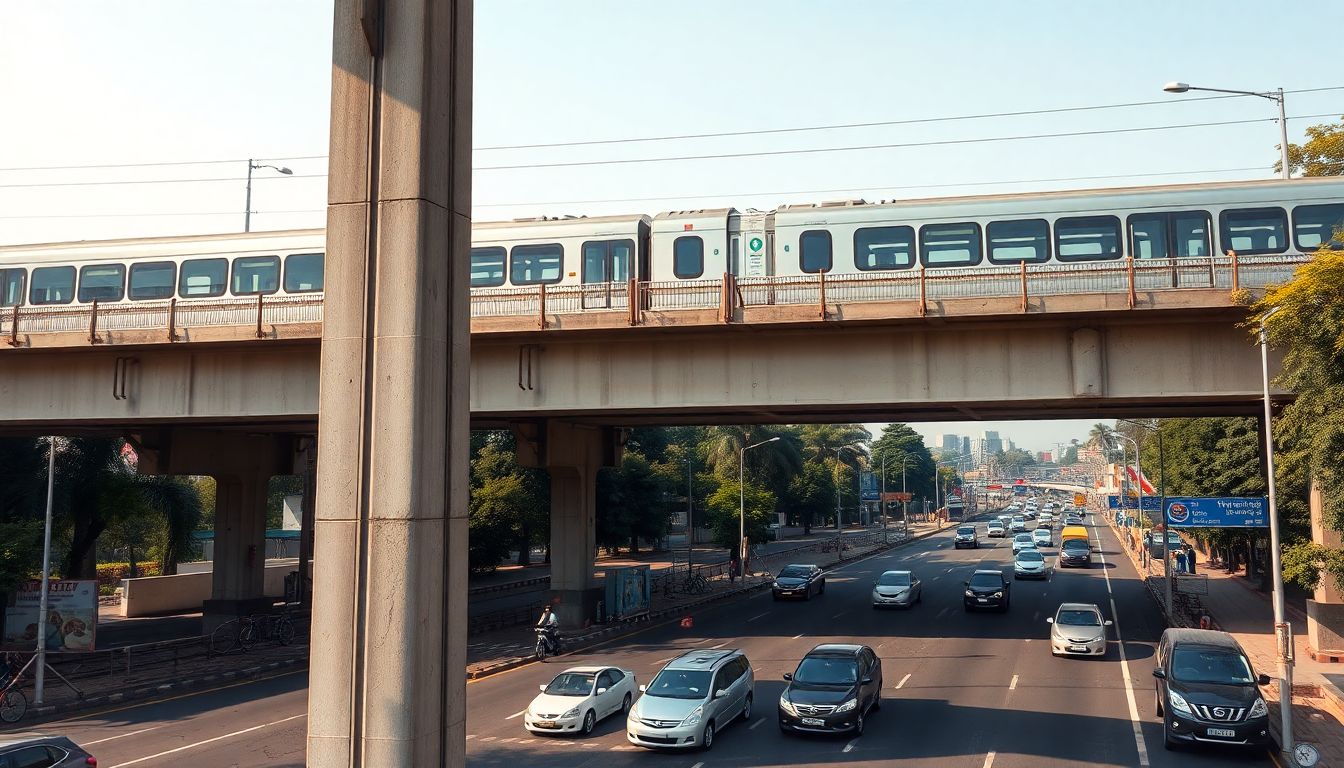
A Comptroller and Auditor General of India (CAG) performance audit tabled in Parliament on Monday revealed that the Bangalore Metro Rail Corporation Limited (BMRCL) achieved just 22.72% of its projected farebox revenue, while land acquisition costs escalated by Rs 6,603.39 crore across Phase 1 and Phase 2. The audit also highlighted planning flaws, including inadequate pedestrian access at Metro stations along National Highways in Peenya, Jalahalli, Dasarahalli, and Nagasandra.
The findings were part of Report No. 7 of 2026 (Performance Audit – Commercial) on the implementation of Phase 1 and Phase 2 of the Bangalore Metro Rail Project, prepared under the Union Ministry of Housing and Urban Affairs. The report noted that BMRCL had failed to achieve, even by 2023, the ridership and peak-hour peak-direction traffic (PHPDT) levels originally projected for 2007.
For Phase 1, actual PHPDT in 2021 ranged between 6,429 and 8,852 passengers, remaining significantly below the 15,000-passenger benchmark required to justify proposing Heavy Metro on a continuous stretch of at least 5 km. The audit stated that BMRCL had not undertaken adequate studies to determine how ridership could be improved.
The ridership shortfall created a substantial revenue gap. Between 2016-17 and 2022-23, BMRCL earned Rs 1,758.13 crore in farebox revenue against a projected target of Rs 7,736.70 crore. Non-fare income also fell short of expectations, ranging between 1.39% and 8.62% of projected farebox revenue, compared to the target of at least 10% envisaged in detailed project reports (DPRs).
Land acquisition costs surged by Rs 6,603.39 crore as of March 2023 due to improper estimation of land requirements in DPRs and delays in acquisition. Phase 1 land costs rose by Rs 835.81 crore, while Phase 2 saw an increase of Rs 5,767.58 crore. BMRCL acquired 62.67 hectares for Phase 1 against a projected requirement of 45.24 hectares. For Phase 2, it acquired 145.16 hectares against a projected requirement of 165.09 hectares, with another 55 hectares meant for property development remaining unacquired as of March 2023.
The CAG flagged several other financial losses, including Rs 294.72 crore in excess land compensation and Rs 186.86 crore in additional interest due to acquisition delays. Furthermore, 2.23 lakh square feet of Metro property remained vacant, leading to a potential loss of Rs 38.53 crore in lease revenue.
Due to these financial strains, BMRCL incurred cash losses between 2013-14 and 2021-22, leaving its revenues insufficient to meet external debt obligations. As of March 2023, the corporation remained dependent on the Karnataka state government to service its project debt.
The report also questioned the Metro's impact on public transit adoption in the city. BMTC's daily footfall dropped from 51.30 lakh in 2014-15 to 27.49 lakh in 2022-23, and the combined ridership of BMTC and Metro remained lower than BMTC's standalone figures from 2014-15.
Key issues cited for low public transport adoption included poor integration between BMTC and Metro, inadequate last-mile connectivity, and insufficient parking. The audit noted that stations at Nagasandra, Peenya, Peenya Industrial Area, Jalahalli, and Dasarahalli were built along National Highways without adequate Foot Over Bridges (FOBs) or underpasses. FOBs at Peenya and Peenya Industrial Area were later found infeasible due to vertical height clearances.