BU Study Identifies Hebbal and Mysore Road Among Bengaluru's Most Polluted Corridors
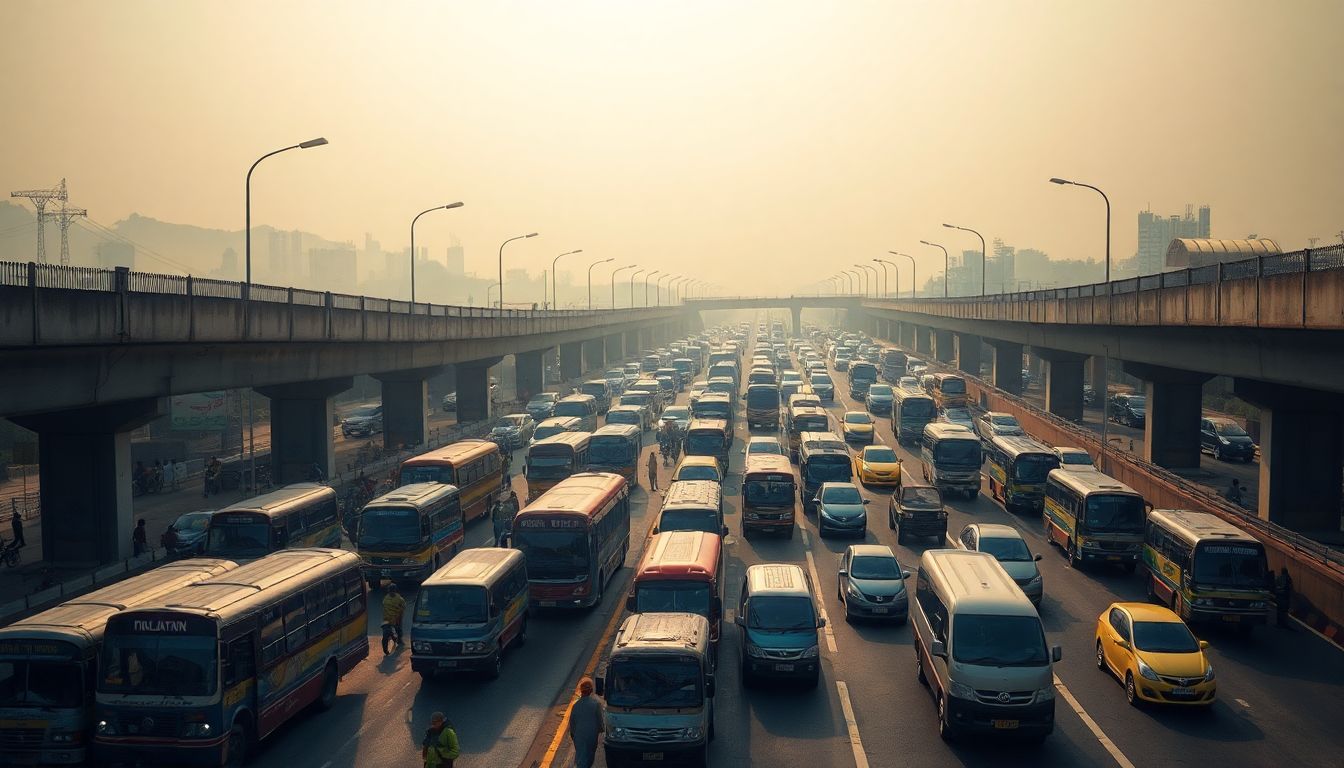
Hebbal Junction has emerged as one of the city's heavily polluted traffic corridors, with seasonal PM2.5 concentrations nearly reaching 90 µg/m³, according to a study by researchers from Bangalore University's Department of Environmental Science.
The study, conducted between January 2022 and December 2025, monitored air quality across seven major urban transit corridors, including Hebbal Junction, Jayadeva Junction, Kanakapura Road, Mysore Road at Jnanabharathi Gate, Silk Board Junction, Tin Factory in KR Puram, and Tumakuru Road in Madhavara. The findings revealed that corridors burdened with heavy traffic congestion experienced substantially higher concentrations of fine particulate matter compared to routes with smoother traffic movement.
Mysore Road at Jnanabharathi Gate recorded the highest overall pollution levels, reaching a peak seasonal concentration of 106 µg/m³ during winter and 89.1 µg/m³ during the pre-monsoon period. Tumakuru Road and Silk Board Junction followed closely, recording consistent PM2.5 levels between 80 and 90 µg/m³ across several seasons. Jayadeva Junction recorded the lowest levels among the studied sites, ranging from approximately 51 to 72 µg/m³, which researchers linked to better traffic dispersion.
Most recorded concentrations significantly exceeded the Central Pollution Control Board standard of 60 µg/m³ for a 24-hour period and the annual limit of 40 µg/m³. Among the monitored pollutants, PM2.5 showed the highest concentrations, while PM10 remained at intermediate levels.
Professor Dr. Nandini N., one of the researchers, noted that heavy vehicular volume and idling at traffic signals serve as primary contributors to elevated PM2.5 levels. Other contributing factors identified by experts include road-dust re-suspension, construction activity, industrial emissions, biomass burning, and regional background pollution.
The study also observed seasonal variations across the city, with the monsoon period recording the lowest pollution levels due to rainfall washing out particulate matter, while winter and post-monsoon months saw pollutants trapped closer to the ground due to weaker atmospheric dispersion.