Bengaluru PM10 Levels Rise 7 Percent as Clean Air Programme Targets Missed
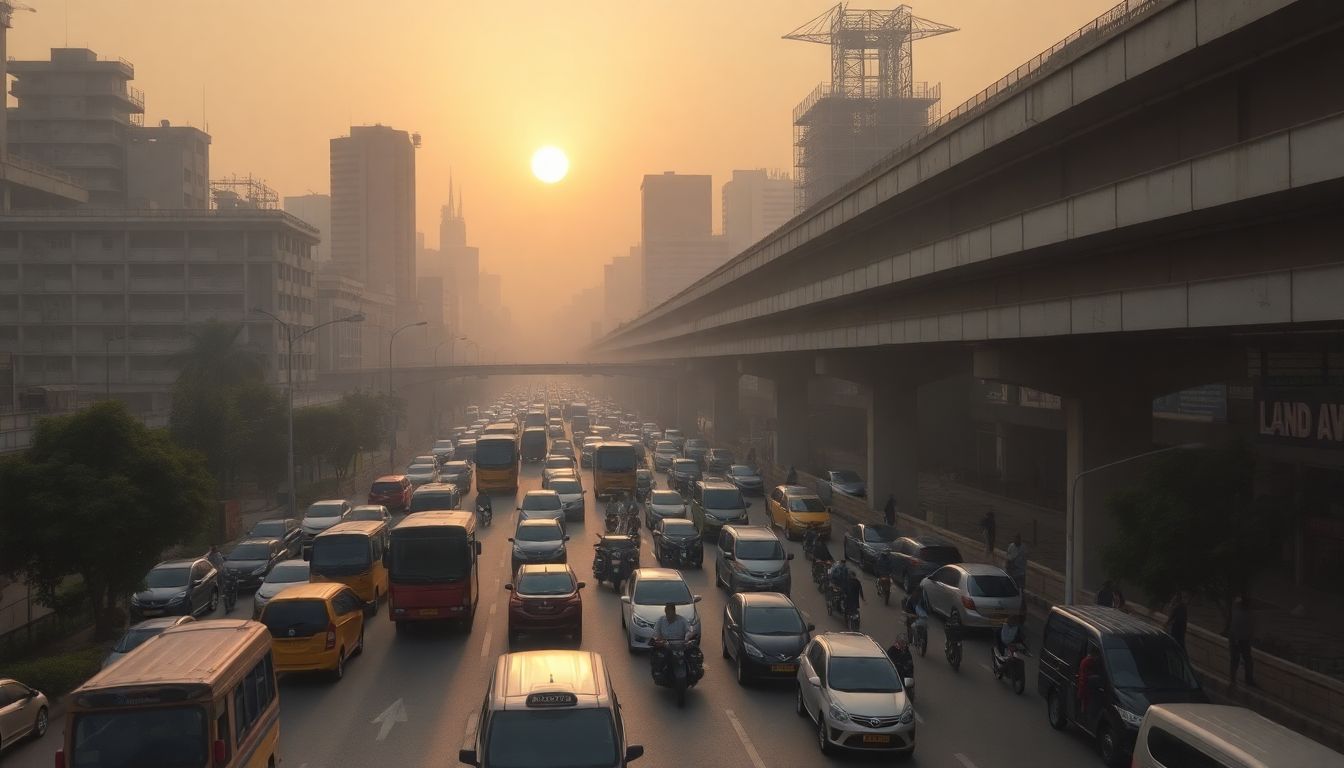
Bengaluru recorded a nearly 7 per cent increase in average annual PM10 particulate matter levels between 2019-20 and 2025-26, making it the only city in Karnataka under the National Clean Air Programme to experience worsening air quality. Fresh data released by the Ministry of Environment, Forest and Climate Change shows that the city's average annual PM10 concentration rose from 73μg/m³ to 78μg/m³, driven by massive infrastructure expansion, construction dust, and heavy vehicular traffic.
The National Clean Air Programme (NCAP) was launched by the Ministry of Environment, Forest and Climate Change in partnership with state governments to improve air quality in a time-bound manner. Under the initiative, four non-attainment cities in Karnataka—Bengaluru, Davangere, Kalaburagi, and Hubballi-Dharwad—were identified by the Central Pollution Control Board (CPCB) for consistently recording air pollution levels above National Ambient Air Quality Standards. The national programme set a target to reduce PM10 levels by up to 40 per cent or bring them down to 60μg/m³ by 2025-26 compared to the 2019-20 baseline.
While Bengaluru's air quality deteriorated, the other three NCAP cities in Karnataka achieved significant progress. PM10 levels in Hubballi-Dharwad fell by over 21 per cent, dropping from 78μg/m³ in 2019-20 to 61μg/m³ in 2025-26. Davanagere registered a nearly 23 per cent decline, bringing concentrations down from 66μg/m³ to 51μg/m³. Kalaburagi recorded the largest percentage reduction at 37.5 per cent, bringing its PM10 concentration down to 50μg/m³.
Environmental experts point to Bengaluru's rapid urbanization as the primary cause of its worsening pollution levels. Dr Prakash Doraiswamy, sector head of Air Quality at the Centre for Study of Science, Technology and Policy (CSTEP), identified rapid infrastructure development, widespread construction, and the constant resuspension of road dust as key drivers behind the upward trend.
Air quality researchers noted that large-scale expansions of roads, metro rail networks, and flyovers generate massive amounts of coarse particulate matter. Uncovered construction materials, demolition works, and heavy vehicular traffic on poorly maintained stretches repeatedly lift settled dust back into the atmosphere. A local researcher added that key NCAP measures were never implemented in spirit in Bengaluru, resulting in a failure to control particulate pollution.