Bengaluru PM10 Levels Exceeded National Limits From 2021 to 2025, Finds CSTEP Study
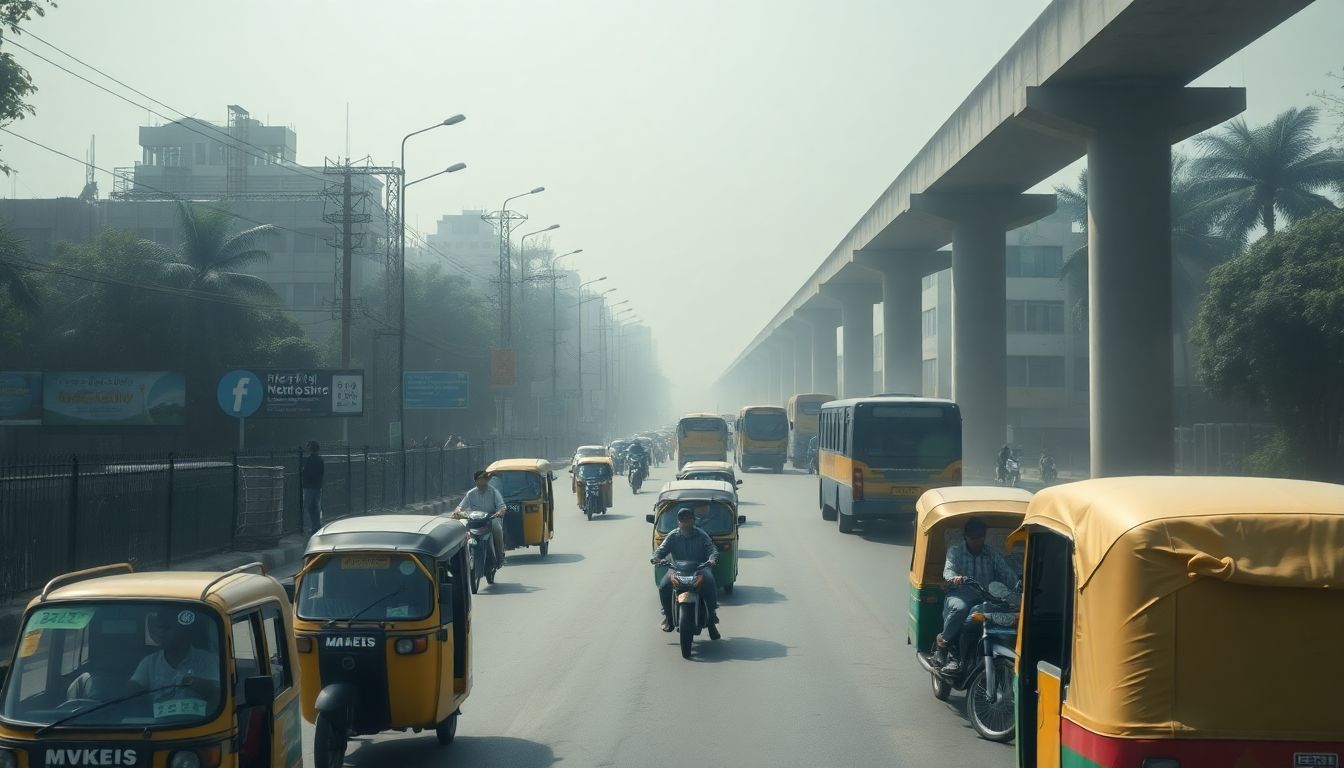
Bengaluru's air quality has remained poorer than that of several other major South Indian cities, with average annual PM10 concentrations exceeding the National Ambient Air Quality Standards in each year between 2021 and 2025, according to findings by the Centre for Study of Science, Technology and Policy.
The study, titled 'Governance Framework for Airshed-Level Air Quality Management in South India', revealed that the city's average annual PM10 levels over the five-year period were higher than those recorded in Chennai and Kochi, and exceeded Hyderabad's levels on some occasions.
Dr Nirav Lekinwala, Senior Associate in the Air Quality sector at CSTEP and one of the study's authors, attributed the high particulate levels to the city's rapid urban growth and intense building activity. Coarse dust particles associated with both private and public infrastructure construction, along with the resuspension of road dust, have been major drivers behind the surge in PM10 concentrations.
While Bengaluru's PM10 concentrations regularly breached permissible thresholds, its PM2.5 levels remained within the permissible limit over the period. However, the city still recorded higher PM2.5 levels than Chennai and Kochi in some years. Researchers warned that the rising PM2.5 trend should not be overlooked due to its serious public health implications.
Air quality monitoring data from Continuous Ambient Air Quality Monitoring Stations in Bengaluru, Kochi, Chennai, Visakhapatnam, and Hyderabad showed that PM10 levels across the region mostly exceeded national standards despite interannual variations. Although significant funding has been allocated under the National Clean Air Programme and local emissions measures have been enforced, air quality improvements have remained limited.
CSTEP researchers noted that a critical challenge in managing urban air pollution is the influence of transboundary and non-local pollution sources transported by wind. In South India, 38% to 65% of annual average pollution originates within the southern states, with Karnataka accounting for 47%, compared to 38% in Telangana, 44% in Andhra Pradesh, 61% in Tamil Nadu, and 65% in Kerala. Because Karnataka both exports and receives moderate amounts of pollution due to its central location, researchers emphasized the need to shift from city-level interventions to an airshed-level management framework.