Bengaluru Giant Rock Bees Shift Nesting to Buildings as Large Trees Disappear
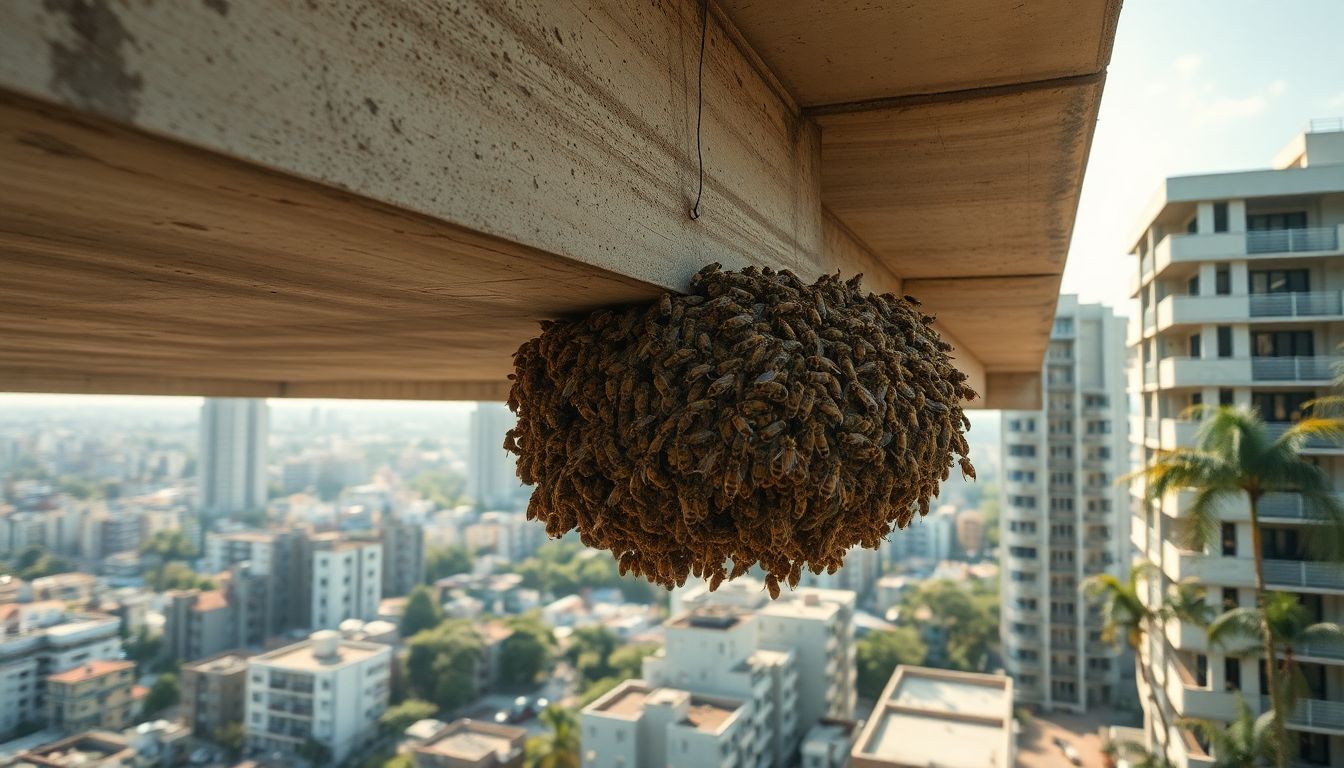
Bengaluru's giant rock bees are increasingly shifting their nesting sites to apartment terraces, high-rise windows, and coconut trees across the city and its outskirts as infrastructure projects continue to fell large trees.
The wild bees, scientifically known as Apis dorsata, traditionally build open colonies on rocky cliffs and the horizontal branches of mature trees. However, as large trees have been cleared for expressways and metro construction, the species has begun adapting to Bengaluru's built environment. A recent colony spotted on a coconut tree in a grove on the outskirts of the city highlighted this evolving behaviour.
Unlike domesticated honey bees kept in closed hives, rock bees build large colonies in the open. They typically begin nesting around November and December before swarming away ahead of the monsoon between April and June.
Abraham Verghese, former Director of the ICAR-National Bureau of Agricultural Insect Resources and former Head of Entomology at ICAR-IIHR, Bengaluru, noted that buildings serve as substitutes when natural cliffs and tall trees vanish. He stated that the bees choose nesting locations at heights such as the third floor and above. While natural sites remain their primary preference, tall urban structures mimic cliff formations.
Survival in urban areas also depends on accessible food sources. Verghese explained that the bees choose suitable nesting sites once they are assured of pollen and nectar resources, which do not need to be immediately adjacent to the hive. Urban flowering trees, including gulmohar, copperpod, tabebuia, and pongamia, play a critical role in sustaining these colonies.
In the case of the coconut grove on the city's outskirts, the local farmer had planned to spray insecticide at night over fears of stings. A team from the AVIAN Trust intervened and persuaded the farmer to leave the colony alone. The bees remained undisturbed and swarmed away naturally between May and June, while local farmers were informed about their role in pollination.
Experts caution that urban nesting does not mean rock bees are thriving. Rashmi M A of Rashvee International Phytosanitary Research and Services noted that pollution reduces worker bee lifespans. Large colonies have historically relied on sites offering both nesting space and flora, such as banyan trees in Doddaballapur and ficus trees at the University of Agricultural Sciences.