Bengaluru Division Porters Face Falling Incomes as Modern Luggage Cuts Demand
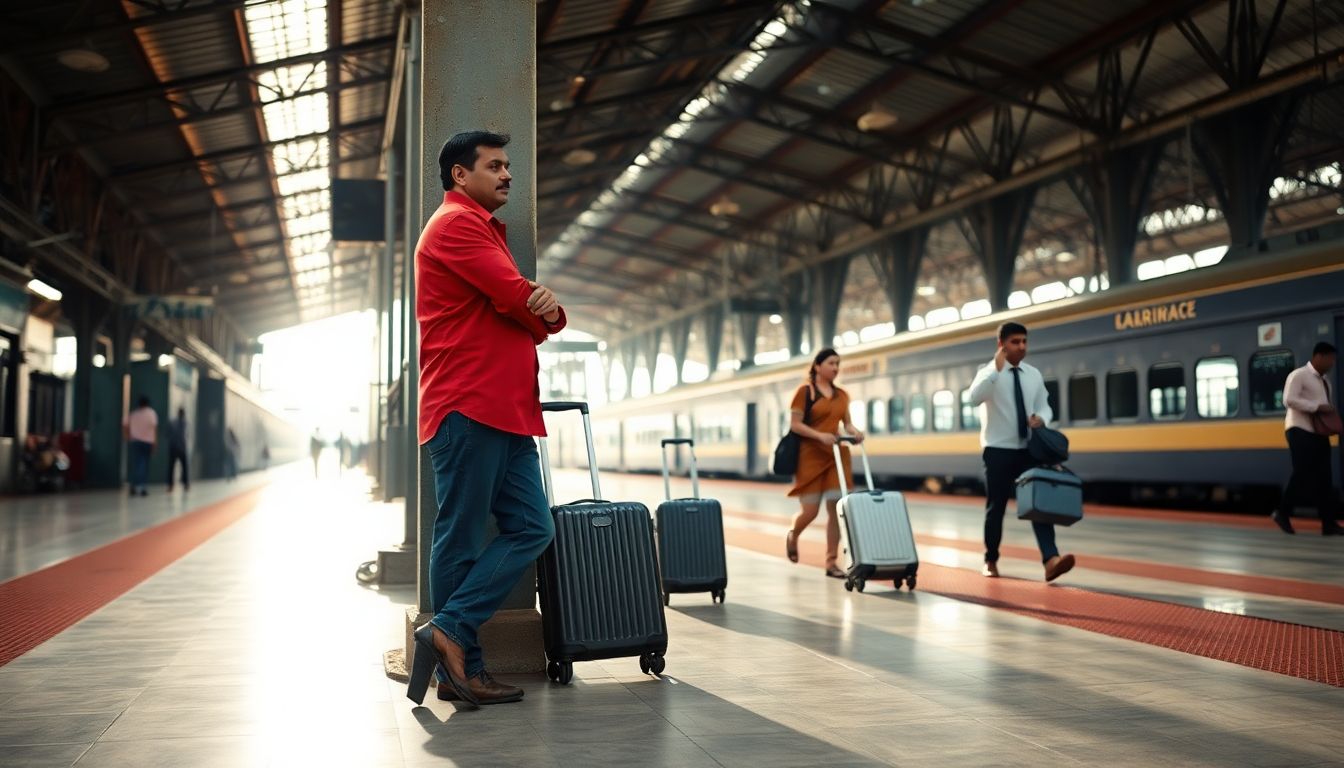
Licenced porters across the Bengaluru Division, including stations at KSR Bengaluru and Whitefield, are facing fluctuating daily earnings and shifting passenger habits as modern travel amenities reduce the need for traditional luggage carrying. According to South Western Railway data, 424 licenced Sahayaks currently operate across 11 stations in the division, navigating a sharp drop in luggage-handling requests.
At KSR Bengaluru railway station, where 270 licenced Sahayaks work, porter Abdul said he earns around Rs 300 to Rs 400 on an average day on Platform 7. Abdul explained that his daily income is quickly consumed by essential living costs, with house rent taking Rs 10,000 and daily food expenses averaging between Rs 200 and Rs 300. The remaining funds are directed toward schooling for his daughter in Class 8 and his son in Class 6, leaving him struggling to clear school fees alongside domestic expenses.
His colleague Anish noted that porters at the station lack a fixed income and rely entirely on passenger demand. He said the widespread adoption of trolley bags and wheeled carriers has substantially reduced the need for passengers to hire luggage handlers. Many porters have consequently shifted toward pushing Railway-supplied luggage carts or operating electric vehicles to transport luggage across platforms.
South Western Railway acknowledged the shifting nature of porter work, noting that the prevalence of trolley bags, lifts, escalators, and battery-operated vehicles has lowered demand for conventional head-load luggage carrying. Across the Bengaluru Division, the 424 Sahayaks are distributed among KSR Bengaluru with 270, Yesvantpur with 41, SMVT Bengaluru with 69, Bengaluru Cantt with 14, Krishnarajapuram with 17, SSP Nilayam with five, Yelahanka with three, Whitefield with two, and one each at Bangarapet, Tumakuru, and Kuppam.
Many porters also expressed hope for regular employment, recalling a 2008 Indian Railways initiative that absorbed over 30,000 eligible licenced porters nationwide into Group D positions, primarily as Gangmen. Under that Railway Board order, porters aged 18 to 50 as of February 26, 2008, who held valid licences, could read and write, and met medical fitness criteria were evaluated by a divisional committee. Abdul noted that his brother Ajmal has made repeated unsuccessful attempts to secure regular Railway employment since that drive.
South Western Railway Chief Public Relations Officer Dr Manjunath Kanmadi stated that the 2008 absorption drive was strictly a one-time measure that was subsequently discontinued. He added that most railway-based appointments require technical knowledge along with reading and writing proficiencies, with those who did not qualify remaining as licenced porters.