37.8 km Hebbal to Sarjapur Red Metro Line Plans Five Interchanges Across Bengaluru
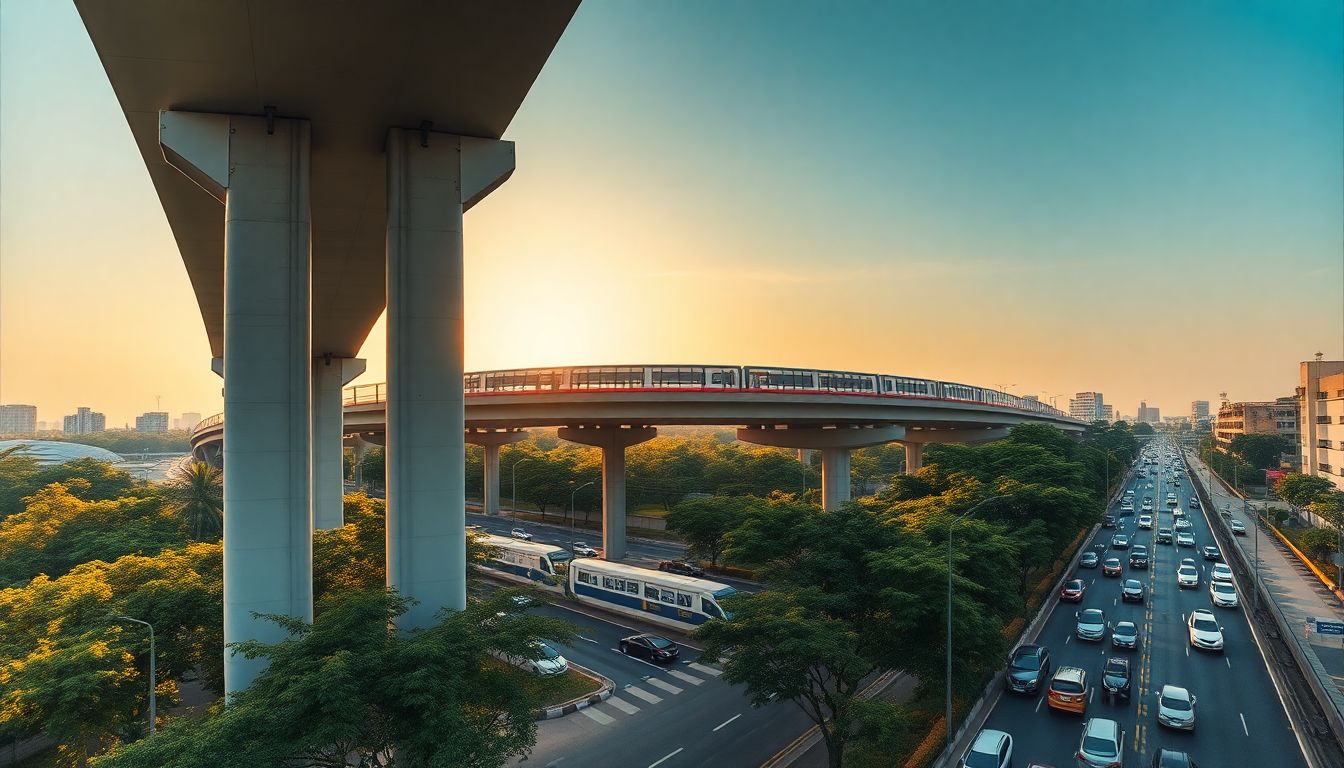
Bengaluru’s planned 37.8-kilometre Red Metro Line (Phase 3A), which will connect Hebbal to Sarjapur, has been designed as a multi-modal transit corridor linking five Metro interchange points, three suburban rail links, and key bus integration stops. The Bangalore Metro Rail Corporation Limited (BMRCL) has prepared the Detailed Project Report for the line, which is projected to become operational by 2033 once full approvals and construction are completed.
The corridor aims to provide cross-city transit by establishing interchanges at major junctions across Bengaluru. Under the plan, the Red Line will connect with the Blue Line at Ibbalur and Agara, while the Dairy Circle station will integrate with the Pink Line connecting Kalena Agrahara and Nagawara.
At KR Circle, a subway link to Sir M Visvesvaraya station near Central College will connect commuters to the existing Purple Line. This connection will enable passengers to reach areas such as Whitefield, Majestic, Challaghatta, Silk Institute, and Madavara through the broader Metro network.
Hebbal is designated to serve as a major inter-modal transport hub along the route. The Hebbal station will bring together the Red Line, the KR Puram to Airport Blue Line (Phase 2B), and the proposed JP Nagar to Kempapura Orange Line (Phase 3). It will also connect directly with Hebbal railway station and the Mallige suburban rail corridor running between Benniganahalli and Chikkabanavara.
Further south along the line, the Red Line will intersect with the Heelalige to Rajanukunte suburban rail line, known as the Kanaka Line, at Carmelaram. To assist bus commuters, planned Bengaluru Metropolitan Transport Corporation (BMTC) integration points are scheduled at Shanti Nagar and Sarjapur, allowing passengers to transfer to the rail network.
According to BMRCL officials, the DPR was prepared to locate Metro stations within 500 metres to 1 kilometre of connecting transport hubs wherever feasible. Commuter groups have welcomed the inclusion of multiple interchange nodes. Divya Kumar, a rail commuter, noted that Bengaluru currently has limited interchange options affecting convenience, adding that additional transit points will save time and boost public transport usage.
Despite the completed proposal, the Phase 3A project is awaiting final approval from the Union government. Responding to a written question in the Rajya Sabha raised by Ajay Maken, the Ministry of Housing and Urban Affairs stated that while the Karnataka government has submitted the DPR, Metro projects require extensive evaluation due to high capital expenditure under the Metro Rail Policy, 2017. As a result, the Ministry indicated that a fixed timeline for central clearance cannot be specified at this stage.